Support our educational content for free when you purchase through links on our site. Learn more
Teacher Supply Store: Find Classroom Essentials 🏫

The best Teacher Supply Store is one that matches your students, teaching goals, and budget—not just one with the biggest wall of colorful markers. Start with a clear supply list, check what your classroom already has, and choose durable materials that support the learning you want to see.
A practical supply run might include everyday basics, hands-on learning tools, storage, or age-specific resources. We’ve seen how a well-chosen set of manipulatives can turn an abstract lesson into something students can build, sort, and explain—and how a few simple labels can prevent a whole classroom’s worth of “Where does this go?” 🧩
Key Takeaways
- 👉 Shop for learning goals first. Match supplies to the activities, skills, and routines your students need.
- Compare store types. Teacher-focused retailers, online suppliers, general stores, and community supply shops each serve different needs.
- Choose by age, access, and safety. Check product guidance and your school’s requirements before buying.
- Plan the classroom, not just the cart. Measure spaces, organize materials, and consider how students will use and return supplies.
- Stretch your budget thoughtfully. Take inventory, prioritize essentials, and look for durable, reusable materials.
- Get advice for complex purchases. Furniture, bulk orders, and specialized learning resources may call for input from school teams or supplier experts.
Table of Contents
- ⚡️ Quick Tips and Facts
- 🏫 Teacher Supply Store Basics: What to Expect
- What Counts as a Teacher Supply Store?
- Teacher Supply Stores vs. Office and Craft Stores
- 📚 A Brief History of Teacher Stores and Classroom Supplies
- 🛒 What to Buy at a Teacher Supply Store
- Classroom Essentials and Everyday Consumables
- Teaching Materials, Manipulatives, and Learning Centers
- Classroom Decor, Bulletin Boards, and Organization
- STEM, Science, and Hands-On Learning Supplies
- Books, Games, and Educational Toys
- Special Education and Sensory Learning Resources
- 🎒 Shop Teacher Supplies by Age and Grade
- Early Childhood and Preschool
- Elementary School
- Middle School
- High School and Beyond
- ✨ Build Your Dream Classroom or Learning Center
- Choose a Classroom Theme That Supports Learning
- Select Flexible Furniture and Storage
- Plan Classroom Layouts for Different Activities
- Create Welcoming, Accessible Learning Spaces
- 🧭 How to Choose the Right Teacher Supply Store
- In-Store, Online, and Hybrid Shopping
- Product Quality, Selection, and Brand Names
- Returns, Rewards, Tax Exemptions, and School Accounts
- Shopping on a Teacher Budget
- 💻 Online Teacher Supply Shopping
- How to Compare Products and Read Reviews
- Ordering for Classrooms, Schools, and Homeschools
- Shipping, Delivery, and Installation
- 🤝 Expert Help, Consultation, and School Purchasing
- When to Ask a Store Expert for Advice
- Bulk Orders, Grants, and School Procurement
- 🎨 Classroom Design Resources and Planning Tools
- Supply Lists and Classroom Checklists
- Decorating Ideas and Printable Resources
- Budgeting and Inventory Planning
- ♻️ Sustainable and Safe Classroom Supplies
- Eco-Friendly and Reusable Options
- Age-Appropriate Materials and Product Safety
- ✅ Quick Tips for a Smarter Teacher Supply Run
- 🏁 Conclusion
- 🔗 Recommended Links
- ❓ FAQ
- What is the best teacher supply store?
- What should teachers buy first for a new classroom?
- Can teachers get discounts or tax exemptions?
- Are online teacher supply stores worth using?
- Where can homeschoolers find classroom supplies?
- 📖 Reference Links
Quick Tips and Facts
In our experience helping educators choose practical classroom materials, the best teacher supply store is the one that matches your students, curriculum, space, and budget—not simply the one with the most colorful aisles. For a broader comparison, see our guide to 🏆 Top 15 Best Online Teacher Supply Stores (2026).
| Quick fact | What it means for you |
|---|---|
| Teacher supply stores serve more than classroom teachers. | Homeschool families, childcare centers, tutors, librarians, and school purchasing teams may all need teaching materials. |
| Shopping by learning goal beats shopping by novelty. | Start with what students need to practice, create, organize, or explore. |
| “Teacher supply store” can mean different things. | Some stores sell new products; others are community donation programs that share supplies with local educators. |
| Classroom supplies vary by age and activity. | Check recommended age ranges, safety guidance, and product instructions before buying. |
| A useful shopping list has three tiers. | Separate must-have, helpful, and nice-to-have items to keep spending focused. |
| Reusable materials can stretch a classroom budget. | Storage bins, dry-erase tools, manipulatives, and washable art supplies often serve students across multiple lessons. |
Quick shopping checklist:
- ✅ List the skills or activities you’re planning for.
- ✅ Check what your classroom already has before buying duplicates.
- ✅ Compare durability, age suitability, storage needs, and replenishment options.
- ✅ Ask your school about purchasing rules, reimbursements, and tax-exempt orders.
- ❌ Don’t assume every product marketed as “educational” has a clear learning purpose.
For general classroom basics, browse Classroom Supplies. For preschool and younger learners, explore Early Childhood Education Supplies.
🏫 Teacher Supply Store Basics: What to Expect
A teacher supply store can be a retail shop, a specialized online retailer, a school purchasing provider, or a community resource. What they have in common is a focus on materials that support teaching and learning: think bulletin-board supplies, classroom organization, books, learning games, manipulatives, art materials, and more.
The right store should make it easier to find materials that fit your actual teaching context. A preschool teacher looking for washable paint and chunky manipulatives has different needs from a high-school chemistry teacher shopping for lab equipment. (Yes, both may also need a reliable supply of pencils.)
What Counts as a Teacher Supply Store?
The phrase covers several types of suppliers:
| Store type | What it typically offers | Best for |
|---|---|---|
| Teacher-focused retailer | Classroom decor, learning materials, furniture, storage, and instructional resources | Teachers outfitting or refreshing a classroom |
| Online education supplier | Searchable catalogs, bulk ordering, and delivery | Schools, centers, and educators ordering from a list |
| General retailer with a school section | Notebooks, pens, paper, craft materials, and seasonal basics | Quick replenishment and everyday supplies |
| Community supply shop | Donated or surplus goods shared with eligible educators | Local teachers looking for no-cost or low-cost materials |
| Specialty supplier | Products for a subject, age group, or learning need | Educators who need targeted resources |
One example of a community-based model is the WJCC Teacher Supply Shop, which describes a program that collects donated classroom supplies for educators in its school community. That’s a different service from a commercial store: one depends on local donations and eligibility, while the other typically sells products from an ongoing catalog.
Teacher Supply Stores vs. Office and Craft Stores
General retailers can be handy for notebooks or markers, but teacher-focused suppliers often organize products around instructional use, age range, classroom setup, or curriculum goals.
| Shopping need | Teacher supply store | Office supply store | Craft store |
|---|---|---|---|
| Bulletin-board borders and classroom themes | Often a core category | Limited | Sometimes available |
| Educational manipulatives and games | Often broad selection | Usually limited | May offer craft-based alternatives |
| Bulk classroom consumables | Often available | Often available | Varies |
| Art and making materials | Common | Basic selection | Often extensive |
| Learning-center resources | Common at education-focused retailers | Rare | Some craft materials |
| Classroom furniture and storage | May be available | Some office furniture | Usually limited |
Our practical rule: shop where the product knowledge and selection fit the job. A craft store may be ideal for a one-off art project; a teacher-focused retailer may better when you’re building a coordinated classroom library or setting up multiple learning centers.
📚 A Brief History of Teacher Stores and Classroom Supplies

The phrase “teacher supply store” now covers everything from local shops to national online catalogs, but the underlying need is familiar: educators need materials that are practical, accessible, and appropriate for learning.
Today’s supply ecosystem includes new retail products, online ordering, school purchasing programs, and community-supported resource shops. For example, WJCC Schools describes a Teacher Supply Shop that makes donated supplies available to educators. It illustrates an important point: a teacher supply store doesn’t have to be a conventional shop with checkout counters.
Online catalogs have also changed how schools and educators compare supplies. A shopper can now review product details, search by subject or age, and assemble orders without hauling a shopping cart through a back-to-school crowd. The trade-off is that you can’t handle the product before purchase, so dimensions, material details, safety guidance, and return terms matter.
🛒 What to Buy at a Teacher Supply Store
The best shopping list starts with what students will do. Are they practicing letter formation, sorting objects, making a model, reading independently, or collaborating in small groups? Once you know the activity, it’s easier to choose supplies that serve a real purpose.
For broad classroom essentials, visit Classroom Supplies. Then add specialized materials where they support your students and curriculum.
Classroom Essentials and Everyday Consumables
Common classroom basics include:
- Pencils, pens, erasers, and sharpeners
- Paper, notebooks, folders, and index cards
- Dry-erase markers and board erasers
- Glue sticks, scissors, and washable markers
- Tissues, labels, and classroom organizers
- Clipboards, sticky notes, and name tags
For consumables, consider how often you’ll need to replenish them, whether students can use them independently, and whether your school has approved brands or purchasing requirements. A bulk pack can be convenient, but only if you have storage space and a realistic use for the whole quantity.
Teaching Materials, Manipulatives, and Learning Centers
Manipulatives make abstract concepts easier to handle—sometimes literally. Counting cubes, pattern blocks, letter tiles, and fraction tools give students something to sort, compare, build, and discuss.
| Material | Common classroom use | What to check |
|---|---|---|
| Learning Resources MathLink Cubes | Counting, patterns, and early math models | Set size, age guidance, and storage |
| Learning Resources Pattern Blocks | Geometry, symmetry, and shape composition | Whether activity cards are included |
| hand2mind fraction tiles | Comparing fractions and representing parts of a whole | Grade suitability and the range of fractions |
| Lakeshore Learning literacy materials | Letter recognition, word work, and small-group practice | Skill level and whether materials match your instruction |
A useful learning-center setup includes:
- One clear skill or goal, such as sorting by attribute or practicing beginning sounds.
- A small number of well-chosen materials so students can focus.
- Simple directions students can follow without waiting for an adult.
- A storage plan that makes cleanup part of the activity.
- A way to observe learning, such as a checklist, student explanation, or completed model.
Classroom Decor, Bulletin Boards, and Organization
Decor can make a room welcoming, but it also needs to earn its wall space. We like visual displays that help students find routines, see their work, or refer to important ideas—not decor that turns every wall into a colorful information traffic jam.
Consider:
- Bulletin-board borders and backing paper for flexible displays
- Pocket charts for schedules, vocabulary, and student activities
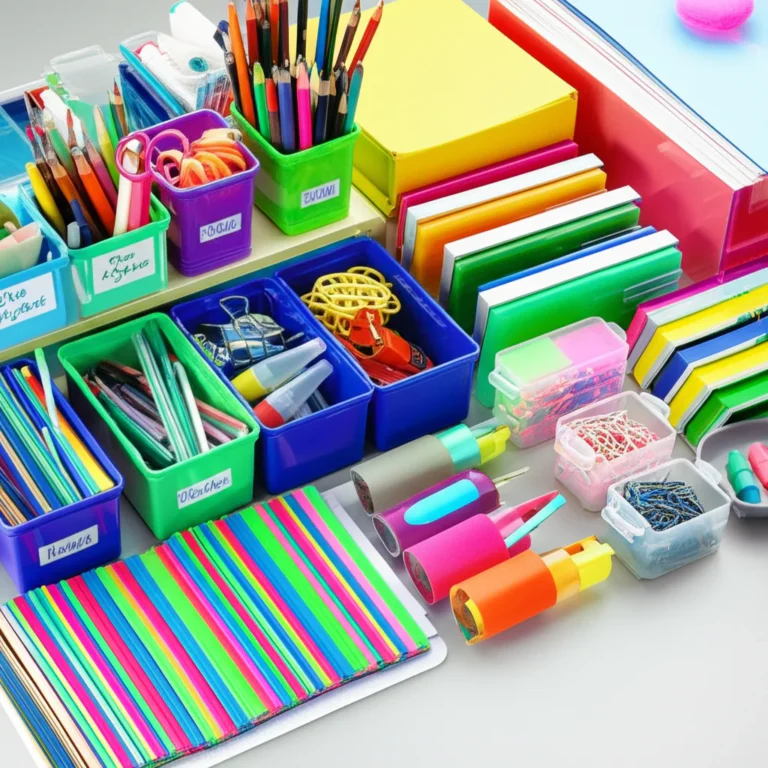
- Labels and bins that show where materials belong
- Book bins and file organizers to make resources accessible
- Visual schedules that support predictable classroom routines
For storage, measure shelves and counters before buying containers. A bin that’s “almost the right size” can become the classroom equivalent of a sock that never stays on.
STEM, Science, and Hands-On Learning Supplies
Hands-on STEM activities help students test ideas, observe patterns, and revise designs. Depending on the age group and school safety rules, supplies might include building materials, measuring tools, magnifiers, journals, or classroom-safe investigation kits.
For science lessons about plants, weather, animals, and seasonal change, prioritize observation materials students can use repeatedly: nature journals, rulers, magnifying glasses, seed-starting supplies, and sorting trays. Follow school guidance and the National Science Teaching Association’s safety resources when planning investigations, especially when activities involve chemicals, heat, tools, or living organisms.
Books, Games, and Educational Toys
A game or toy can support learning when students know what to do with it. Look for products that invite explanation, practice, collaboration, or creative problem-solving, rather than relying on a flashy package to do the teaching.
Popular classroom brands include:
- Melissa & Doug for pretend play, puzzles, and hands-on activities
- Learning Resources for manipulatives, games, and classroom learning materials
- Lakeshore Learning for books, furniture, and classroom resources
- hand2mind for hands-on math and science materials
Before purchasing, check the age recommendation, number of players, replacement-piece policy, storage needs, and accessibility. For a classroom set, one missing piece can turn a cooperative game into an archaeological investigation.
Special Education and Sensory Learning Resources
Educators supporting students with disabilities may look for visual schedules, adapted tools, sensory materials, communication supports, and resources for differentiated instruction. The right choice depends on the learner and should align with the student’s individualized supports and school guidance.
When comparing options:
- Check whether the product can be adjusted for different skill levels.
- Look for clear descriptions of materials, size, and intended use.
- Ask a special educator, occupational therapist, or school team member when a tool may affect an individual student’s support plan.
- Consider sensory preferences and access needs rather than assuming one product suits every learner.
The National Center on Accessible Educational Materials offers guidance on accessible educational materials and how access needs can influence learning resources.
🎒 Shop Teacher Supplies by Age and Grade
Age is a useful starting point, not a substitute for knowing your students. Skill levels, developmental needs, curriculum, and classroom routines all matter. Always read product guidance and adapt materials to your setting.
| Learner group | Common supply priorities | Helpful checks |
|---|---|---|
| Early childhood | Washable art supplies, sturdy manipulatives, pretend-play materials, visual routines | Choking hazards, durability, and adult supervision |
| Elementary | Reading and math manipulatives, classroom libraries, organization, art and STEM supplies | Skill fit, group-use durability, and storage |
| Middle school | Subject-specific resources, collaboration tools, project materials, organization | Curriculum alignment and student independence |
| High school | Lab or technical materials, reference resources, presentation tools, career-related supplies | School policies, subject requirements, and safety |
Early Childhood and Preschool
For early learners, useful classroom materials encourage language, movement, play, fine-motor practice, and exploration. Browse Early Childhood Education Supplies for age-focused resources.
Common choices include:
- Washable crayons, markers, and paint
- Large building pieces and puzzles
- Picture books and dramatic-play props
- Sorting, matching, and counting materials
- Floor cushions, low shelves, and clearly labeled bins
The U.S. Consumer Product Safety Commission provides toy-safety information for consumers. Follow product labels and your center’s safety policies, especially when selecting materials for children who may mouth objects.
Elementary School
Elementary classrooms benefit from resources that can be used across subjects: counters for math, writing materials for literacy, and project supplies for science and social studies. Teachers often find that flexible materials outperform single-use novelty supplies because they can support multiple lessons and skill levels.
Middle School
Middle-school students are ready for more independent work, collaborative projects, and subject-specific tools. Think reusable group supplies, notebooks, presentation materials, and resources that let students test ideas or show understanding in multiple ways.
A practical planning question: Can students access and return this material without a teacher managing every step? If yes, it may be a good fit for stations or project work.
High School and Beyond
Secondary educators may need materials tied closely to a subject area: lab resources, technical education supplies, art materials, books, presentation tools, or career-readiness resources. For specialized items, coordinate with department leads and follow school purchasing and safety policies.
✨ Build Your Dream Classroom or Learning Center
A strong classroom setup supports learning, movement, inclusion, and cleanup. You don’t need a matching set of everything; you need a room that works for the students and activities you have.
Choose a Classroom Theme That Supports Learning
Themes can make a classroom feel cohesive, but they should not compete with important visual information. Choose a palette and a few recurring elements, then keep learning displays readable and uncluttered.
A practical approach:
- Pick a calm base color or simple theme.
- Use consistent labels and visual cues.
- Save display space for student work and current learning.
- Check whether important directions remain easy to see.
- Refresh displays when they stop serving a purpose.
Select Flexible Furniture and Storage
Before choosing furniture, think about how the room changes throughout the day. A flexible table, mobile cart, or accessible book display may be more useful than a large item that dictates the entire layout.
| Furniture or storage | Potential benefit | Possible drawback |
|---|---|---|
| Mobile carts | Supplies can move between groups | Need a parking spot when not in use |
| Low book displays | Students can browse independently | Require routine organization |
| Stackable bins | Flexible storage for centers and projects | Labels are essential to prevent mystery-bin syndrome |
| Flexible seating | Supports varied work positions | Needs clear routines and classroom expectations |
| Table caddies | Keeps shared tools close at hand | Can clutter work surfaces if overfilled |
Plan Classroom Layouts for Different Activities
Start with the flow of students and materials—not the furniture catalog.
- Mark the room’s fixed features: doors, windows, sinks, outlets, and built-ins.
- Identify activity zones, such as whole-group instruction, independent reading, small-group work, and project areas.
- Keep travel paths clear and accessible.
- Place frequently used materials near the students who need them.
- Test the layout during a real class activity, then adjust.
For accessibility planning, the U.S. Access Board’s accessibility resources can help you understand broader access considerations. Follow applicable school policies and local requirements when arranging learning spaces.
Create Welcoming, Accessible Learning Spaces
A welcoming room lets students understand where to go, what materials are available, and how to participate. Use readable labels, predictable storage, and options for students to engage with materials in different ways. Ask students what helps them work comfortably; they often notice practical snags adults miss.
🧭 How to Choose the Right Teacher Supply Store
A good store should make your job easier—not leave you decoding vague product descriptions while your prep period disappears.
In-Store, Online, and Hybrid Shopping
| Shopping method | Advantages | Trade-offs |
|---|---|---|
| In-store | See and handle products; ask staff questions | Travel, limited local stock, and less selection |
| Online | Broad catalog, search filters, home or school delivery | You can’t inspect items first; shipping and returns vary |
| Hybrid | Research online, inspect in person, or pick up locally | Requires coordination between channels |
If you’re deciding where to shop, compare store selection, delivery policies, and educator services in our online teacher supply store guide.
Product Quality, Selection, and Brand Names
A recognizable brand can help you find consistent product lines, but brand name alone doesn’t guarantee a product is right for your classroom. Compare the details:
- Product dimensions and materials
- Intended age range and use
- Quantity per set
- Cleaning and maintenance guidance
- Replacement parts or replenishment options
- Independent reviews that describe classroom use
When reviews conflict, look for patterns. One complaint about packaging may be less telling than repeated reports of fragile pieces or confusing instructions. A store page, a manufacturer’s instructions, and a teacher’s day-to-day experience each answer different questions.
Returns, Rewards, Tax Exemptions, and School Accounts
Policies differ by retailer, school district, and location. Before placing an order, confirm:
- Whether opened classroom materials can be returned
- How damaged or missing items are handled
- Whether your school account needs approval
- What documentation is required for tax-exempt purchases
- Whether purchase orders are accepted
- Whether educator rewards or discounts apply
Don’t assume a teacher’s personal purchase is automatically tax-exempt. Requirements vary. Ask the retailer and your school finance office, and consult your state’s tax authority when needed. The Federation of Tax Administrators links to state tax agencies.
Shopping on a Teacher Budget
Stretch a budget by planning for repeated use and avoiding duplicate purchases.
- Take inventory before shopping.
- Separate essential materials from optional decor.
- Choose durable, reusable items for frequent activities.
- Share sets across grade-level teams where schedules allow.
- Ask about donation programs or surplus supplies.
- Check school purchasing rules before buying with personal funds.
Community-based programs may help fill gaps. WJCC Schools, for example, describes a donation-supported Teacher Supply Shop for local educators; access and inventory are specific to that program.
💻 Online Teacher Supply Shopping
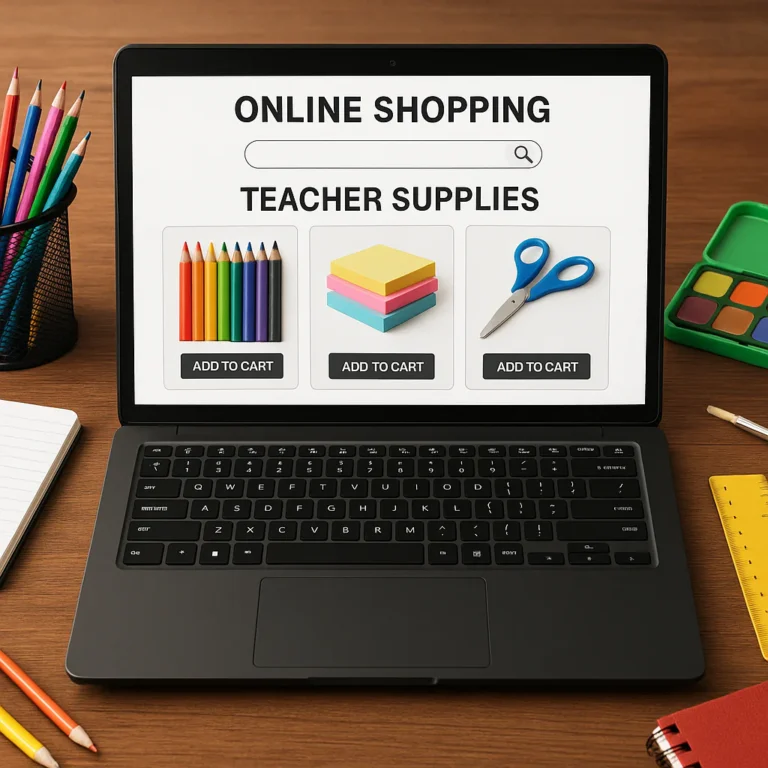
Online ordering is especially useful when you need to compare learning materials, create repeatable supply lists, or coordinate a classroom order. The key is to shop from product details, not thumbnail photos.
How to Compare Products and Read Reviews
Use this quick comparison process:
- Search by learning goal, not just by product type.
- Read the full specifications, including materials, size, age guidance, and quantity.
- Check whether accessories are included or sold separately.
- Read recent reviews for recurring themes, not just the star rating.
- Compare shipping, returns, and replacement support.
- Ask whether the materials fit your classroom routines and storage space.
Reviews are most useful when they explain context: grade level, frequency of use, number of students, and what the reviewer expected. A product that works beautifully for a small-group preschool activity might be a poor choice for a full class set used daily.
Ordering for Classrooms, Schools, and Homeschools
For a team or school order, make a shared list with product names, quantities, and intended use. Confirm who approves the order and where it should be delivered. Homeschool families may prefer smaller sets, multi-use materials, and supplies that store neatly at home.
A sample order-planning table:
| Need | Quantity decision | Order note |
|---|---|---|
| Shared classroom tools | One set per group or station | Confirm storage and checkout routines |
| Student consumables | Based on enrollment and planned use | Check whether families or school provide them |
| Reusable manipulatives | Based on group size and rotation | Plan for sorting and replacement |
| Furniture or large items | Based on room measurements | Confirm delivery access and assembly needs |
Shipping, Delivery, and Installation
Delivery details matter most for furniture, large classroom orders, or supplies needed by a specific date. Review the retailer’s information on shipping windows, delivery location, assembly, damaged items, and signature requirements. For installation, confirm what the service includes and whether your building must prepare the space.
Teacher tip: put deadline-sensitive items in their own order plan. One delayed bulletin-board set is annoying; a delayed classroom table needed for the first week is a much bigger puzzle.
🤝 Expert Help, Consultation, and School Purchasing
Some purchases are simple. Others—like classroom furniture, assistive tools, or large sets of subject materials—benefit from advice from someone who understands the product and the teaching context.
When to Ask a Store Expert for Advice
Ask for help when you need to compare:
- Furniture dimensions and room fit
- Learning materials for a specific age or skill
- Storage systems for shared supplies
- Classroom sets with multiple components
- Special education or sensory resources
- Delivery or installation requirements
Bring your room measurements, age group, class size, and intended activity. “I need something for math” is a start; “I need a durable hands-on way for small groups to model fractions” gives an expert much more to work with.
Bulk Orders, Grants, and School Procurement
Bulk purchasing can simplify ordering, but it isn’t automatically the best value. Check whether you can use the full quantity, store it safely, and distribute it fairly. Schools should also verify vendor approval, purchase-order procedures, grant requirements, and delivery logistics before committing.
The U.S. Department of Education offers information about federal education funding programs; specific grant rules depend on the program and award. Follow your institution’s procurement guidance and keep documentation for purchases tied to school funds.
🎨 Classroom Design Resources and Planning Tools
Planning tools turn a hopeful shopping cart into a classroom plan. Before buying, sketch the room, list the activities you want to support, and identify what you already own.
Supply Lists and Classroom Checklists
Build a list in categories:
- Instruction: books, manipulatives, subject materials
- Daily use: writing tools, paper, adhesives
- Organization: bins, labels, folders, caddies
- Student access: visual supports, accessible tools, classroom libraries
- Projects: reusable STEM or art materials
- Safety and care: storage, cleaning guidance, protective equipment as appropriate
Mark each item as already available, needed now, or can wait. This simple step prevents the classic back-to-school purchase of the fourth box of markers while the classroom still has no place to put them.
Decorating Ideas and Printable Resources
Decor works best when it makes the room easier to understand. Use signs for routines, labels for storage, and displays that connect to current learning. Printable resources can be helpful, but check licensing terms before copying or sharing materials beyond permitted use.
For classroom decor and organization, look for materials that are readable from the student’s seat, easy to update, and consistent with your classroom routines.
Budgeting and Inventory Planning
A low-friction inventory system can be a labeled spreadsheet, shared document, or simple count sheet. Record what you have, where it lives, how often it is used, and when you need to replenish it.
| Inventory field | Why it helps |
|---|---|
| Item name and category | Makes supplies easier to find |
| Quantity on hand | Prevents unnecessary repeat orders |
| Storage location | Helps students and colleagues return items |
| Reorder point | Makes replenishment predictable |
| Condition or notes | Flags damaged or incomplete sets |
♻️ Sustainable and Safe Classroom Supplies
Sustainable classroom shopping is not just about buying recycled products. It also means choosing useful materials, reusing what you can, and reducing waste without compromising safety or access.
Eco-Friendly and Reusable Options
Ideas for reducing waste include:
- Reusable dry-erase tools and sleeves
- Washable art materials where appropriate
- Refillable organizers and durable storage
- Reclaimed cardboard for supervised building projects
- Scrap paper for drafts, models, and practice
- Classroom lending systems for books and shared tools
For recycled materials, sort items carefully and avoid anything dirty, sharp, chemically contaminated, or unsuitable for the students using it. The U.S. Environmental Protection Agency’s recycling guidance can help with general recycling information, though local rules vary.
Age-Appropriate Materials and Product Safety
Read labels, follow instructions, and use materials as intended. For younger students, check small parts and supervision guidance. For science or art activities, follow school safety policies and the manufacturer’s directions.
The CPSC toy safety guidance is a useful reference for toy-related safety questions. For classroom science activities, consult NSTA safety resources and your school’s procedures.
✅ Quick Tips for a Smarter Teacher Supply Run

- Start with the lesson or routine, then choose materials.
- Measure before buying furniture, bins, or displays.
- Check school inventory and team-sharing options first.
- Choose reusable materials for activities you repeat.
- Compare product details instead of relying on packaging claims.
- Ask about community donation programs if your school or district offers them.
- Keep receipts and order records for school reimbursement or purchasing.
- Make cleanup part of the design. If students can’t return materials easily, the best storage system is still just a very organized mess waiting to happen.
- Keep age, access, and safety in view for every product.
- Thank the people who make classroom resources possible. The featured video gives a humorous parent’s perspective on supporting teachers during back-to-school season. Its comic enthusiasm for buying “anything” is a lively reminder of appreciation, not a substitute for checking the official supply list or school purchasing guidance.