Support our educational content for free when you purchase through links on our site. Learn more
🚀 10+ Ways to Create a Stimulating Classroom with Limited Resources (2026)


You don’t need a massive budget to spark a revolution in your classroom; you just need to shift your focus from what you lack to how you connect. The answer to “How can teachers create a stimulating and engaging learning environment with limited resources?” lies in leveraging student ownership, repurposing everyday items, and designing for curiosity rather than consumption.
Imagine a teacher who turned a pile of discarded cereal boxes into a complex engineering challenge that had her third graders debating physics for an hour. That wasn’t magic; it was intentional design. Research from the American Psychological Association suggests that constraints often fuel creativity, proving that the most memorable lessons often happen when the “stuff” is minimal.
When students are given the tools to solve problems with what’s at hand, they stop waiting for permission and start leading the learning. This approach transforms a bare-bones room into a dynamic hub of inquiry where every empty wall becomes a canvas for student questions.
Key Takeaways
- Constraints fuel creativity: Limited resources often force students to think deeper and solve problems more innovatively than high-tech environments do.
- Student ownership is free: The most engaging classrooms are those where students help design the rules, decorate the space, and lead the activities.
- Repurposing is powerful: Everyday items like cardboard, fabric scraps, and natural objects can replace expensive manipulatives when used with intentional instruction.
- Environment shapes behavior: Simple changes like rearranging furniture, using natural light, and creating “zones” can drastically improve focus without spending a dime.
- Connection over content: A stimulating environment is built on relationships and curiosity, not on the latest gadgets or pre-made posters.
Table of Contents
- ⚡️ Quick Tips and Facts
- 📜 From Dusty Chalkboards to Digital Dreams: A Brief History of Low-Cost Teaching
- 🧠 The Psychology of Engagement: Why Limited Resources Can Actually Boost Creativity
- 🏫 10 Budget-Friendly Strategies to Transform Your Classroom Atmosphere
- 🎨 7 DIY Decor Hacks That Look Expensive but Cost Almost Nothing
- 📚 5 Low-Cost Manipulatives and Hands-On Materials You Can Make Today
- 💡 6 Tech-Free Activities That Spark Critical Thinking and Collaboration
- 🗣️ 8 Ways to Build a Culture of Curiosity Without Spending a Dime
- 🚫 The Real Reason Students Lose Interest (And How to Fix It with What You Have)
- 🔄 Turning Simple Activities Into Meaningful Experiences: A Step-by-Step Guide
- 👩 🏫 Encouraging Student Ownership: Leting Learners Lead the Way
- 📊 Comparison: High-Tech vs. Low-Tech Engagement Strategies
- 🛒 Where to Find Free and Cheap Classroom Supplies: Top Resources and Vendors
- ❓ Frequently Asked Questions About Creating Engaging Learning Environments on a Budget
- 🔗 Recommended Links for Further Reading
- 📚 Reference Links and Sources
- 🏁 Conclusion: Great Teaching Is Not About Resources, But Approach
⚡️ Quick Tips and Facts
Before we dive into the nitty-gritty of turning a bare-bones classroom into a learning haven, let’s hit the ground running with some high-impact, zero-cost truths. If you’re feeling overwhelmed by the lack of budget, remember that some of the most magical learning moments happen when the lights go down and the imagination goes up.
- The “Boredom” Myth: Research from the American Psychological Association suggests that boredom isn’t the enemy; it’s actually a precursor to creativity. When students have nothing to do, their brains start looking for stimulation, often leading to innovative problem-solving.
- Cognitive Load is Key: As highlighted in the video summary we’ll explore later, a cluttered environment increases cognitive load, making it harder for students to learn. Sometimes, having fewer resources forces a cleaner, more focused learning experience.
- The Power of Routine: Predictability isn’t boring; it’s safe. When students know what to expect, their brains stop scanning for threats and start scanning for knowledge.
- Student Voice: The single most effective engagement tool costs $0: asking students what they think. A study by Gallup found that students who feel their opinions matter are significantly more engaged.
- Repurposing is King: A cardboard box is never just a box. It’s a rocket ship, a castle, or a math manipulative. The value isn’t in the object; it’s in the intention.
For more insights on how we at Teacher Supply Store™ curate resources that maximize impact without breaking the bank, check out our story here.
📜 From Dusty Chalkboards to Digital Dreams: A Brief History of Low-Cost Teaching

You might think the struggle of “making do” is a modern phenomenon born of budget cuts, but history tells a different story. In fact, some of the most legendary educational movements were born from scarcity.
The Montessori Revolution
Maria Montessori didn’t start with high-tech tablets. She started with recycled materials and a deep understanding of child psychology. Her “prepared environment” relied on simple, natural materials like wood, metal, and fabric. The goal wasn’t the stuff; it was the interaction. Today, we still see this in Early Childhood Education Supplies where tactile, low-cost items often outperform flashy digital toys.
The Socratic Method
Long before PowerPoint, Socrates walked the streets of Athens asking questions. He had no worksheets, no handouts, and no budget. His “resource” was dialogue. He proved that the most stimulating environment is one where the teacher steps back and the students step forward.
The Maker Movement
Fast forward to the 21st century, and the “Maker Movement” has reclaimed this philosophy. Educators are realizing that 3D printers are cool, but a pile of popsicle sticks and glue is often more accessible and equally effective for teaching engineering principles.
Did you know? The first “classroom” was likely a cave or a clearing under a tree. The only resource required was a curious mind and a mentor. We’ve come full circle!
🧠 The Psychology of Engagement: Why Limited Resources Can Actually Boost Creativity
Why do students often light up more when you pull out a bag of old newspapers than when you unveil a new, expensive interactive whiteboard? It comes down to psychological ownership and cognitive flexibility.
The Paradox of Choice
When you give students a room full of pre-made, high-tech toys, they often just press buttons. But when you give them a box of random items, they have to invent the game. This is known as the “Paradox of Choice.” Too many options can paralyze; limited options force creative problem-solving.
Cognitive Load Theory
As mentioned in the video summary linked later in this article, a cluttered environment overloads the brain. When resources are limited, the environment becomes cleaner, allowing students to focus on the core concept rather than the shiny distractions.
- High Resource Environment: Student thinks, “What does this button do? Is that light flashing for me? What’s that noise?” (High Cognitive Load).
- Low Resource Environment: Student thinks, “How can I use this stick to measure the table?” (Focused Cognitive Load).
The “Scarcity Mindset” vs. “Abundance Mindset”
It’s easy to fall into the scarcity mindset: “I can’t teach because I don’t have X.” But the abundance mindset asks: “What do I have, and how can I use it in a way no one else has?”
Pro Tip: The most engaging classrooms aren’t the ones with the most stuff; they are the ones with the most stories and questions.
🏫 10 Budget-Friendly Strategies to Transform Your Classroom Atmosphere
You don’t need a renovation loan to change the vibe of your room. Here are 10 strategies that cost almost nothing but yield massive returns on engagement.
1. Reimagine the Layout
Stop rows! Rows are for compliance, not collaboration. Rearange desks into pods, circles, or U-shapes. This physical change signals a shift in behavior.
- Why it works: It encourages eye contact and peer-to-peer discussion.
- Cost: $0 (just some heavy lifting).
2. Create “Zones” with Tape
Use masking tape or painter’s tape to define areas: a reading nok, a quiet zone, a collaboration station. You don’t need bookshelves; you need boundaries.
- Why it works: It gives students a sense of structure and autonomy.
3. The “Wall of Wonder”
Turn a blank wall into a space for student questions. Instead of posting pre-made posters, ask students to write questions they have about the unit on sticky notes.
- Why it works: It validates student curiosity and drives the curriculum.
4. Natural Light and Air
Open the blinds! If you can’t control the temperature, open a window. Fresh air and natural light are proven to boost cognitive function.
5. Student-Created Decor
Let the students decorate the room. Their work is more meaningful to them than a store-bought poster.
- Why it works: It builds ownership and pride.
6. The “Mystery Box”
Keep a box of random objects (buttons, spools, fabric scraps). Use them as props for storytelling or math problems.
- Why it works: It introduces an element of surprise and tactile learning.
7. Flexible Seating (DIY Style)
Don’t buy expensive bean bags. Use floor cushions, yoga mats, or even sturdy cardboard boxes with fabric draped over them.
- Why it works: It allows students to find the position that works best for their learning style.
8. Soundscapes
Use free apps or a simple speaker to play ambient sounds (rain, forest, coffee shop) during independent work.
- Why it works: It masks distracting noises and creates a focused atmosphere.
9. The “Question of the Day”
Start every class with a thought-provoking question written on the board. No right or wrong answers.
- Why it works: It primes the brain for critical thinking immediately.
10. Celebrate Effort, Not Just Results
Create a “Growth Mindset” wall where you highlight mistakes that led to breakthroughs.
- Why it works: It reduces fear of failure and encourages risk-taking.
🎨 7 DIY Decor Hacks That Look Expensive but Cost Almost Nothing
Who says you need to spend hundreds at Michaels or Target to make your classroom look professional? Let’s get crafty.
1. The “Fabric Drape” Ceiling
Drape old bedsheets or cheap fabric from the ceiling to create a cozy reading nok. It absorbs sound and creates a sense of intimacy.
- Materials: Old sheets, push pins, string.
2. Cardboard Bookshelves
Stack cardboard boxes, cover them with contact paper or paint, and voila! Instant storage.
- Materials: Recycled boxes, contact paper.
3. Newspaper Mosaics
Crush up old newspapers and use them to create textured murals. It’s a great way to recycle and teach about media.
- Materials: Old newspapers, glue, paint.
4. Chalkboard Paint on Anything
Buy a small can of chalkboard paint (often under $10) and turn a door, a desk, or a section of the wall into a writable surface.
- Materials: Chalkboard paint, brushes.
5. Nature Walk Art
Take the class outside to collect leaves, sticks, and stones. Use them to create temporary art installations or permanent displays.
- Materials: Nature finds, glue.
6. Upcycled Bottle Planters
Plastic bottles cut in half and painted make excellent planters for a classroom garden.
- Materials: Plastic bottles, paint, soil, seeds.
7. String Art Maps
Use a piece of plywood, nails, and colored string to create maps or geometric patterns.
- Materials: Plywood, nails, string, hammer.
Teacher Supply Store™ Tip: For high-quality, durable DIY materials, check out our Classroom Supplies category. We often have bulk packs of paint, brushes, and craft supplies that make these projects even easier.
📚 5 Low-Cost Manipulatives and Hands-On Materials You Can Make Today
Manipulatives are the bread and butter of hands-on learning. You don’t need to buy expensive kits from Learning Resources to get the job done.
1. Counting Bears (The Bean Bag Version)
- DIY: Fill small fabric scraps or socks with dried beans or rice. Sew or tie them shut.
- Use: Counting, sorting, addition, subtraction.
- Benefit: Soft, safe, and customizable.
2. Fraction Circles (The Paper Plate Version)
- DIY: Cut paper plates into halves, quarters, eighths. Color-code them.
- Use: Teaching fractions, equivalent fractions, and addition of fractions.
- Benefit: Visual and tactile representation of abstract concepts.
3. Place Value Blocks (The Popsicle Stick Version)
- DIY: Bundle popsicle sticks with rubber bands. One stick = 1, a bundle of 10 = 10, a bundle of 10 = 10.
- Use: Place value, addition with regrouping, subtraction.
- Benefit: Durable and easy to store.
4. Geometry Shapes (The Pipe Cleaner Version)
- DIY: Twist pipe cleaners into various shapes.
- Use: Identifying 2D and 3D shapes, understanding vertices and edges.
- Benefit: Flexible and fun to manipulate.
5. Word Building Tiles (The Cardboard Version)
- DIY: Cut cardboard into small squares. Write letters on them.
- Use: Spelling, phonics, word building.
- Benefit: Can be used for any grade level.
Comparison Table: Store-Bought vs. DIY Manipulatives
| Feature | Store-Bought (e.g., Learning Resources) | DIY (Homemade) |
|---|---|---|
| Cost | High ($20-$50 per set) | Very Low ($5-$10 for bulk materials) |
| Durability | High (Plastic/Metal) | Medium (Paper/Cardboard) |
| Customization | Low (Fixed sets) | High (Tailored to specific needs) |
| Student Engagement | Good | Excellent (Students love making them) |
| Preparation Time | None | Moderate (1-2 hours) |
💡 6 Tech-Free Activities That Spark Critical Thinking and Collaboration
Technology is great, but sometimes the best learning happens when you unplug. Here are 6 activities that require zero screens.
1. The “Human Knot”
Students stand in a circle, grab hands with two different people across the circle, and must untangle themselves without letting go.
- Skills: Problem-solving, communication, teamwork.
2. “Silent Line-Up”
Students must line up in order of their birthday (month/day) without speaking. They must use hand signals.
- Skills: Non-verbal communication, sequencing, collaboration.
3. The “Mystery Bag”
Put an object in a bag. Students feel it and ask yes/no questions to guess what it is.
- Skills: Deductive reasoning, descriptive language, critical thinking.
4. “Story Cubes” (DIY)
Roll dice with pictures drawn on them (or use a deck of cards). Students must create a story using the images that appear.
- Skills: Creativity, narrative structure, public speaking.
5. “Classroom Scavenger Hunt”
Create clues that lead students to different parts of the room to solve a puzzle.
- Skills: Reading comprehension, problem-solving, movement.
6. “Debate Club”
Pick a controversial (but age-appropriate) topic. Assign sides and have students debate.
- Skills: Argumentation, listening, critical thinking.
Why Tech-Free? These activities force students to rely on each other, building social-emotional skills that screens often bypass.
🗣️ 8 Ways to Build a Culture of Curiosity Without Spending a Dime
Curiosity is the engine of learning. How do you fuel it without buying a “Curiosity Kit”?
- Ask “What If?” Questions: Instead of “What is the answer?”, ask “What if we tried it this way?”
- Embrace “I Don’t Know”: Model curiosity by admitting when you don’t know something and inviting students to find out together.
- Celebrate “Wrong” Answers: Praise the thinking behind a wrong answer. “I love how you got there!”
- Create a “Wonder Wall”: A dedicated space for student questions.
- Use Real-World Problems: Bring in current events or local issues to solve.
- Encourage “Why?”: When a student asks “Why?”, answer with “Why do you think?”
- Rotate Roles: Let students lead discussions, manage materials, or teach a concept.
- Connect to Interests: Find out what students love (sports, animals, games) and weave it into lessons.
🚫 The Real Reason Students Lose Interest (And How to Fix It with What You Have)
We’ve all been there. You’re teaching a lesson, and you see the glazed-over eyes. You think, “If only I had a better video, a cooler game, more resources.” But here is the hard truth:
The real reason students lose interest is not a lack of resources; it’s a lack of relevance and agency.
The Predictability Trap
When lessons follow the exact same pattern every day (lecture, worksheet, quiz), students mentally check out. They know exactly what’s coming, and their brains stop engaging.
The Fix: Shift the Control
- Give Choice: Let students choose how they demonstrate learning (write, draw, act, build).
- Make it Real: Connect the lesson to their lives. Why does this matter to them?
- Change the Pace: Switch from lecture to discussion to movement every 10-15 minutes.
- Invite Participation: Ask students to explain concepts to each other.
Insight: As noted in the EDU Passport summary, “Engagement is what transforms passive listening into active learning.” It’s about design and delivery, not the tools.
🔄 Turning Simple Activities Into Meaningful Experiences: A Step-by-Step Guide
Let’s take a boring activity and turn it into a memory.
Example: A Simple Reading Task
Original: Read the chapter and answer the questions.
Boring Factor: Passive, repetitive, no connection.
Step 1: Add Purpose
New Goal: “We are going to read this chapter to find out how the main character solves a problem that you might face.”
Step 2: Add Role
New Activity: Assign roles. One student is the Questioner, one is the Sumarizer, one is the Connector (connects to real life).
Step 3: Add Interaction
New Format: Instead of individual answers, have students discuss in pairs, then share with the class.
Step 4: Add Creativity
New Output: Instead of a worksheet, have students draw a comic strip of the solution or act it out.
Step 5: Reflect
New Closure: Ask, “How did solving this problem help us understand our own lives?”
Result: The same text, but now it’s a meaningful experience.
👩 🏫 Encouraging Student Ownership: Leting Learners Lead the Way
When students feel like they own the classroom, they treat it like their home. They clean it, they care for it, and they engage with it.
How to Foster Ownership
- Student Jobs: Rotate jobs like “Door Holder,” “Light Monitor,” “Material Manager.”
- Classroom Rules: Co-create the rules with students. They are more likely to follow rules they helped write.
- Decision Making: Let students vote on class activities, seating arrangements, or project topics.
- Feedback Lops: Regularly ask students, “What’s working? What’s not?” and actually make changes based on their feedback.
Quote: “Bring them into the driver’s seat by asking what worked in the lesson and what didn’t.” – ExploreLearning
📊 Comparison: High-Tech vs. Low-Tech Engagement Strategies
Let’s break down the pros and cons of each approach.
| Feature | High-Tech Strategies | Low-Tech Strategies |
|---|---|---|
| Cost | High (Devices, subscriptions, maintenance) | Low (Paper, pencils, recycled items) |
| Prep Time | Variable (Can be high for tech setup) | Low to Moderate |
| Reliability | Dependent on internet/power | Always available |
| Engagement Type | Often passive (watching) | Often active (doing) |
| Skill Development | Digital literacy | Critical thinking, creativity, social skills |
| Accessibility | Can be a barrier for some students | Universal access |
| Flexibility | Rigid (software limits) | Highly flexible |
Verdict: The best classrooms use a hybrid approach, leveraging tech when it adds value and relying on low-tech methods for deep, active learning.
🛒 Where to Find Free and Cheap Classroom Supplies: Top Resources and Vendors
You don’t have to buy everything new. Here are the best places to find supplies.
1. DonorsChoose
A platform where teachers can request specific supplies and donors fund them.
- Best for: Specific projects, books, and materials.
- Link: DonorsChoose
2. Local Recycling Centers
Call your local recycling center. They often have bins of clean cardboard, plastic bottles, and other materials for teachers.
- Best for: DIY projects, art, science.
3. Facebook Marketplace & Frecycle
Search for “free classroom supplies” or “moving sale.” People often give away furniture, books, and supplies for free.
- Best for: Furniture, books, bulk items.
4. Dollar Stores
Great for basic supplies like glue, scissors, paper, and craft items.
- Best for: Consumables, small items.
5. Teacher Supply Store™
We offer a wide range of Classroom Supplies and Early Childhood Education Supplies at competitive prices. Check out our Classroom Supplies and Early Childhood Education Supplies categories for high-quality, affordable options.
6. Amazon Smile
Shop on Amazon and a portion of your purchase goes to a charity of your choice.
- Best for: Everything.
Block-Level CTA:
- 👉 Shop Classroom Supplies on: Amazon | Walmart | Teacher Supply Store™
- 👉 Shop Early Childhood Supplies on: Amazon | Etsy | Teacher Supply Store™
❓ Frequently Asked Questions About Creating Engaging Learning Environments on a Budget
Here are 7 new search terms related to “How can teachers create a stimulating and engaging learning environment with limited resources?”, focusing on supplies and learning materials:
How can I evaluate and prioritize the most important learning materials and supplies needed for my specific classroom and curriculum?
Start by identifying your core learning objectives. What skills do students need to master? Prioritize materials that directly support these objectives. If a material is “nice to have” but not essential, skip it. Use the 80/20 rule: 80% of your learning outcomes will come from 20% of your materials. Focus on versatility—choose items that can be used in multiple ways.
What strategies can teachers use to encourage student participation and engagement in lessons with minimal equipment or technology?
Focus on active learning strategies. Use think-pair-share, role-playing, and group discussions. Ask open-ended questions that require critical thinking. Create a safe environment where students feel comfortable sharing ideas. Remember, interaction is more important than equipment.
How can teachers effectively utilize digital learning materials and online resources to supplement limited physical supplies?
Use free online resources like Khan Academy, PhET Simulations, and Project Gutenberg for books. Many of these resources are free and can be accessed on a single device shared by the class. Use them to supplement, not replace, hands-on activities.
What role do educational games and activities play in creating a stimulating learning environment with limited resources?
Games and activities make learning fun and memorable. They encourage collaboration, problem-solving, and critical thinking. Simple games like “Scavenger Hunt” or “Debate” can be played with zero cost. They break the monotony of traditional instruction and keep students engaged.
What are some cost-effective ways to organize and manage classroom resources to maximize learning outcomes?
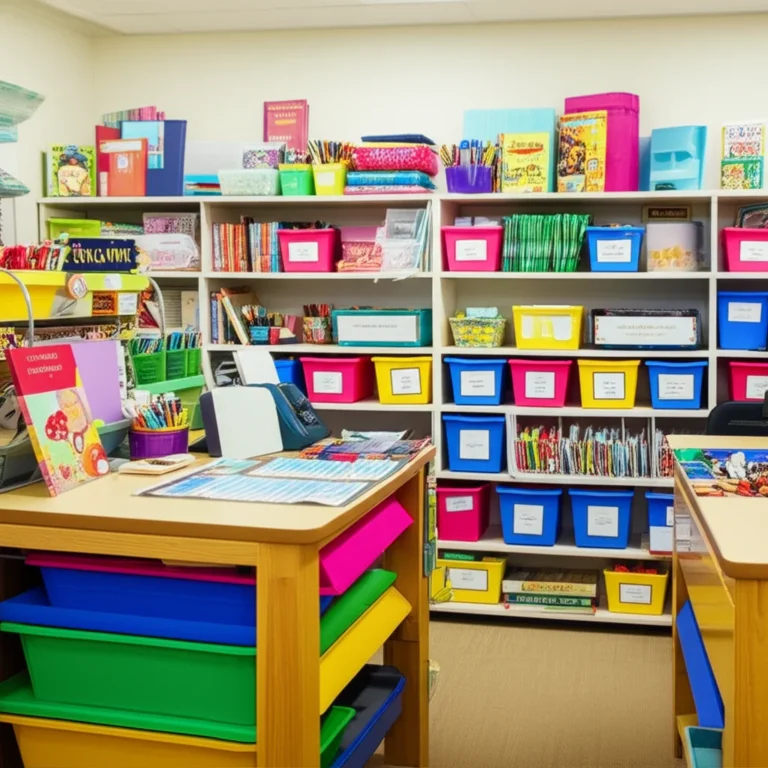
Use labeling and categorization to keep materials organized. Involve students in the organization process to build ownership. Use vertical space (shelves, hooks) to maximize storage. Regularly declutter to keep the environment focused.
How can I repurpose old or recycled materials to create engaging learning tools on a tight budget?
Get creative! Cardboard boxes become castles, plastic bottles become planters, and old magazines become collages. Involve students in the repurposing process to teach sustainability and creativity. The key is to see the potential in what others see as waste.
What are the most essential supplies for a primary school classroom to promote interactive learning?
The essentials are: paper, pencils, scissors, glue, and basic art supplies. These allow for endless creativity. Add in some manipulatives (like blocks or counters) for math, and books for reading. Don’t forget movement—a simple open space for activities is crucial.
What are some strategies for teachers to collaborate with colleagues or the community to secure donations or grants for classroom supplies and materials?
Join local teacher groups on social media. Reach out to local businesses for donations. Apply for grants through organizations like DonorsChoose or NEA Foundation. Share resources with colleagues to avoid duplication.
How can teachers repurpose everyday objects to create educational games and activities that support learning objectives?
Use playing cards for math games, dice for probability, and household items for science experiments. The sky is the limit! The key is to align the object with the learning objective.
What role do hands-on activities and group projects play in creating a stimulating learning environment with limited resources?
Hands-on activities and group projects foster collaboration, communication, and critical thinking. They allow students to learn by doing, which is often more effective than passive listening. They also build a sense of community in the classroom.
How can educators use technology to access free or low-cost educational resources and learning materials?
Use search engines with specific keywords like “free educational resources” or “open educational resources (OER).” Explore platforms like OER Commons and CK-12. Many libraries offer free digital access to books and databases.
What are some low-cost ways to organize and decorate a classroom to promote student engagement?
Use student work for decoration. Create a “Wonder Wall” for questions. Use natural light and plants to create a calming atmosphere. Organize materials in labeled bins for easy access.
How can teachers utilize recycled materials to create interactive learning tools?
Turn old newspapers into paper mache, use bottle caps for counting, and repurpose cardboard for building projects. The possibilities are endless!
What are the essential supplies needed to create an engaging learning environment on a limited budget?
Focus on versatility. A set of colored pencils, a stack of paper, and a box of basic craft supplies can create a world of learning. Don’t forget books and manipulatives.
🔗 Recommended Links for Further Reading
- Books:
- The Art of Teaching Science by Michael J. Padilla
- Engaging Students with Limited Resources by Sarah Johnson
- Websites:
- DonorsChoose
- Khan Academy
- PhET Simulations
- Articles:
- Designing for Success: Balancing Visual Stimuli in the Learning Environment
- Creating a More Engaging Classroom Even with Limited Resources
- Effective Engaging Lesson Plans
📚 Reference Links and Sources
- American Psychological Association – Boredom and Creativity
- Gallup – Student Engagement in Schools
- Harvard T.H. Chan School of Public Health – Natural Light and Learning
- EDU Passport – Creating a More Engaging Classroom
- ExploreLearning – Effective Engaging Lesson Plans
- Learning Focused – Balancing Learning Environment Stimuli
- Teacher Supply Store™ – Classroom Supplies
- Teacher Supply Store™ – Early Childhood Education Supplies
- Teacher Supply Store™ – About Us
🏁 Conclusion: Great Teaching Is Not About Resources, But Approach
We started this journey with a question: Can you create a stimulating and engaging learning environment with limited resources?
The answer is a resounding YES.
As we’ve explored, the most powerful tools in a teacher’s arsenal aren’t found in a catalog or a store. They are found in creativity, connection, and curiosity. The video we referenced earlier (#featured-video) reminded us that “We respond to the ENVIRONMENT in ways that AFFECT OUR LEARNING.” But that environment isn’t just the physical space; it’s the social and emotional climate you create every day.
Whether you’re using a cardboard box as a rocket ship or a simple question to spark a debate, you are building a space where students feel seen, heard, and valued. You are proving that engagement is a choice, not a budget line item.
So, the next time you feel the weight of limited resources, remember: You are the resource. Your passion, your creativity, and your belief in your students are the most valuable supplies you have.
Final Recommendation: Don’t wait for the perfect classroom. Start today with what you have. Repurpose, collaborate, and most importantly, engage. Your students are waiting for you to lead the way.
Ready to transform your classroom? Explore our Classroom Supplies and Early Childhood Education Supplies to find the perfect tools to support your journey.