Support our educational content for free when you purchase through links on our site. Learn more
🎒 The Ultimate Teacher Supply List: 50+ Essentials for 2026


Remember the panic of realizing you forgot the glue sticks on the first day of school? You aren’t alone. According to the National Education Association, the average teacher spends over $60 of their own money annually to fill the gaps left by school budgets. While other lists might stop at 17 items, we’ve dug deep to compile the comprehensive, 50+ item teacher supply list you actually need to survive and thrive from September to June. From the “survival kit” that gets you through the first week to the specialized tech tools that redefine modern learning, this guide covers every grade level and subject. We’ll even reveal the one digital platform that has cut supply-related stress for parents by 40% and how to get those supplies without breaking the bank. Ready to transform your classroom from chaotic to curated? Let’s dive in.
Key Takeaways
- Prioritize the Essentials First: Focus on hygiene items, writing tools, and paper before splurging on decorative or specialized materials to ensure a smooth start to the school year.
- Go Digital for Efficiency: Switching to a centralized digital supply list (like TeacherLists) can save families time and reduce missing items by nearly 40%.
- Budget Smart: You don’t need the most expensive brands; bulk buying generic staples and utilizing teacher discounts at major retailers like Amazon and Walmart can stretch your budget significantly.
- Tailor to Your Grade: A Kindergarten list requires sensory tools and safety scissors, while High School needs advanced calculators and lab safety gear; customize your list to match your students’ developmental needs.
- Don’t Forget the “Thrive” Items: Beyond the basics, items like wireless microphones, document cameras, and flexible seating can elevate your teaching experience and student engagement.
Table of Contents
- ⚡️ Quick Tips and Facts
- 📚 The Evolution of the Teacher Supply List: From Chalkboards to Clouds
- 🎒 The Ultimate Classroom Essentials: What Every Educator Actually Needs
- 📝 Detailed Breakdown of Core Classroom Supplies
- ✏️ Writing and Marking Tools
- 📐 Organization and Storage Solutions
- 🎨 Art and Creative Materials
- 📚 Reference Books and Learning Aids
- 🧸 Subject-Specific Supply Lists by Grade Level
- 🌱 Early Childhood and Kindergarten
- 📖 Elementary School (Grades 1-5)
- 🔬 Middle School (Grades 6-8)
- 🎓 High School (Grades 9-12)
- 🏫 Department-Specific Needs: Science, Math, and ELA
- 💻 Tech and Digital Tools for the Modern Classroom
- 🤝 How School and District Leaders Can Streamline Back-to-School Logistics
- 👨 👩 👧 👦 Why Families Love the Convenience of Centralized Supply Lists
- 🚀 Transforming Supply List Shopping with TeacherLists
- 🤝 Interested in Partnering with Us for Your District?
- 🧠 Expert Insights: What Experienced Teachers Wish They Knew
- 🛒 Where to Buy: Best Retailers for Teacher Supplies
- 📊 Comparison: Traditional vs. Digital Supply Lists
- 🔥 Pro Tips for Maximizing Your Classroom Budget
- ❓ Frequently Asked Questions About Teacher Supply Lists
- 📚 Recommended Links and Resources
- 📖 Reference Links
- 🏁 Conclusion
⚡️ Quick Tips and Facts
Before you dive into the abyss of the supply closet or the endless scroll of online shopping carts, let’s hit the pause button and grab a few golden nugets of wisdom straight from the trenches. We’ve seen it all, from the teacher who bought 50 glue sticks only to find out the school provided them, to the one who forgot the tissues and had to trade a gold star for a box of Klenex.
Here is the lowdown on navigating the teacher supply list chaos:
- The “First Week” Rule: You don’t need everything on Day 1. Prioritize hygiene items (tissues, wipes) and writing tools first. The fancy art supplies can wait until the first art project is announced.
- Budget Reality Check: According to a survey by NEA (National Education Association), the average teacher spends over $60 of their own money on classroom supplies annually. Don’t break the bank! Always check if your school or district provides a stipend or a bulk order list before you swipe your card.
- The “One of Each” Myth: While it’s tempting to buy one of everything, bulk buying is your best friend for consumables like pencils, paper, and tissues.
- Digital vs. Paper: The trend is shifting! Many districts now use digital supply lists to streamline ordering. Check your school’s portal first; you might not need to print a single sheet.
- The “Lost & Found” Factor: Assume 30% of student supplies will vanish into the ether by October. Buy extras of the essentials (pencils, erasers) and label everything with a permanent marker or name tape.
Pro Tip: If you see a “Teacher Supply List” that asks for a specific brand of everything, be skeptical. Often, generic brands work just as well for things like paper towels or glue, saving you a bundle.
📚 The Evolution of the Teacher Supply List: From Chalkboards to Clouds
Remember the days when a teacher’s supply list was just a handwritten note on a chalkboard? “Bring chalk, erasers, and a bucket of water.” Simple, right? Well, things have changed. The history of the teacher supply list is a fascinating journey from the dusty corners of the 19th century to the cloud-based, algorithm-driven lists of today.
In the early 190s, the list was often a community effort. Parents would bring in whatever they could find—old newspapers for art, scrap wood for building projects. It was resourceful, but chaotic. Fast forward to the 1980s and 90s, and the list became a standardized document, often photocopied and handed out at open house. It was the era of the “Classroom Supply Drive,” where parents scrambled to buy 30 boxes of crayons and 15 packs of scissors.
But here’s where it gets interesting: Why did the lists get so long?
As education shifted towards student-centered learning and differentiated instruction, the need for diverse materials exploded. We moved from “one size fits all” to “one size fits every student.” This meant needing manipulatives for math, specialized paper for writing, and tech tools for research. The list grew from a page to a pamphlet, and eventually, a website.
Today, we are in the Digital Age of Supply Lists. Platforms like TeacherLists have revolutionized how we manage these needs. Instead of a PDF that gets lost in a backpack, lists are now shoppable, trackable, and centralized.
Did you know? The shift to digital lists has reduced the “missing supply” rate by nearly 40% in districts that adopted them, according to data from School Family Media.
But with this evolution comes a new problem: Analysis Paralysis. When you have 50 options for a single item, how do you choose? That’s where we come in. We’ve distilled the noise into a clear, actionable guide.
🎒 The Ultimate Classroom Essentials: What Every Educator Actually Needs
So, you’re ready to build your dream classroom. But before you start filling your cart, let’s separate the wants from the needs. We’ve compiled a list of the absolute non-negotiables that every teacher, from Kindergarten to High School, needs to survive and thrive.
The “Survival Kit” (Day 1 Essentials)
These are the items you cannot start the year without. If you forget these, the first week will be a nightmare.
- Tissues: The currency of the classroom. Students sneze, cry, and wipe noses. Never run out.
- Hand Sanitizer & Wipes: Hygiene is non-negotiable. Keep a stash at the door and on your desk.
- Pencils & Erasers: The lifeblood of the classroom. Buy in bulk.
- Paper: Notebook paper, construction paper, and printer paper.
- Glue Sticks & Liquid Glue: For everything from collages to interactive notebooks.
- Scissors: Get a mix of safety scissors for little ones and standard ones for older kids.
- Markers & Crayons: Essential for creativity and color-coding.
- Whiteboard Markers & Erasers: If you have a whiteboard, you need these. And you need lots of them.
The “Thrive Kit” (Game Changers)
Once the basics are covered, these items will elevate your teaching and make your life infinitely easier.
- Sticky Notes: For feedback, reminders, and quick checks.
- Binder Clips & Paper Clips: The unsung heroes of organization.
- Label Maker: If you want your classroom to look professional and organized, this is a must.
- Timer: Essential for managing activities and transitions.
- Extension Cords & Power Strips: For charging devices and powering your tech.
Wait, what about the fancy stuff? You might be wondering, “What about the wireless microphones and the interactive projectors?” We’ll get to those in the Tech and Digital Tools section. For now, focus on the foundation.
📝 Detailed Breakdown of Core Classroom Supplies
Now, let’s get granular. We’re going to break down the core supplies into categories, so you know exactly what to look for and why it matters.
✏️ Writing and Marking Tools
This is where the magic happens. But not all writing tools are created equal.
- Pencils: Go for No. 2 HB pencils. Brands like Ticonderoga are legendary for a reason—they sharpen well and don’t break easily.
Why? A dull pencil frustrates students and ruins their handwriting.
Brand Check: Ticonderoga Pencils on Amazon - Pens: For older students, gel pens are a hit. Pilot G2 and Paper Mate Flair are favorites.
Why? They flow smoothly and come in fun colors for color-coding notes.
Brand Check: Pilot G2 on Amazon - Markers: Crayola is the gold standard for kids. For teachers, Sharpie permanent markers are a must for labeling.
Why? Crayola markers are non-toxic and washable. Sharpies last forever.
Brand Check: Crayola Markers on Amazon - Whiteboard Markers: Expo is the industry leader.
Why? They write smoothly and erase cleanly. Avoid cheap knock-offs; they dry out in a week.
Brand Check: Expo Markers on Amazon
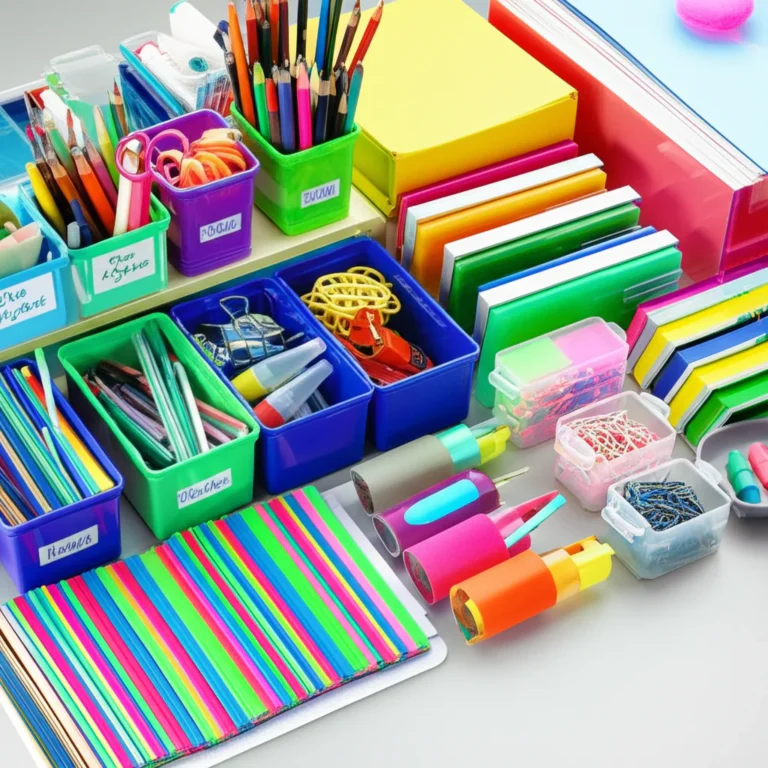
📐 Organization and Storage Solutions
A messy classroom is a stressed classroom. Organization is key to a productive learning environment.
- Storage Bins: Sterilite and Rubermaid offer durable, stackable bins.
Why? They keep supplies accessible and the room tidy.
Brand Check: Sterilite Bins on Amazon - File Folders: Get a mix of manila and colored folders.
Why? Color-coding by subject or group makes retrieval a breeze.
Brand Check: File Folders on Amazon - Caddies: Plastic caddies are perfect for group work.
Why? They allow students to grab supplies quickly and return them easily.
Brand Check: Plastic Caddies on Amazon
🎨 Art and Creative Materials
Creativity is not a luxury; it’s a necessity. Here’s what you need to fuel the artists in your room.
- Construction Paper: Pacon and Crayola offer vibrant, thick paper.
Why? It holds up to glue and scissors without tearing.
Brand Check: Construction Paper on Amazon - Colored Pencils: Prismacolor or Crayola for students.
Why? They blend well and don’t break easily.
Brand Check: Colored Pencils on Amazon - Glue: Elmer’s is the go-to.
Why? It’s reliable, non-toxic, and dries clear.
Brand Check: Elmer’s Glue on Amazon
📚 Reference Books and Learning Aids
Every classroom needs a little bit of knowledge at hand.
- Dictionaries & Thesauruses: Meriam-Webster is the standard.
Why? They help students expand their vocabulary and improve writing.
Brand Check: Meriam-Webster Dictionary on Amazon - Atlas & Maps: National Geographic maps are excellent.
Why? They provide accurate, engaging visuals for geography lessons.
Brand Check: National Geographic Maps on Amazon
🧸 Subject-Specific Supply Lists by Grade Level
One size does not fit all. A Kindergarten teacher’s list looks very different from a High School Chemistry teacher’s. Let’s break it down by grade level.
🌱 Early Childhood and Kindergarten
At this age, the focus is on sensory play, fine motor skills, and basic literacy.
- Must-Haves:
- Playdough (and tools)
- Large crayons and thick pencils
- Safety scissors
- Glue sticks
- Stickers (for rewards)
- Washable paint and brushes
- Picture books
- Why? These items help develop hand-eye coordination and introduce basic concepts in a fun way.
- Pro Tip: Buy washable everything. You will thank yourself later.
- Explore More: Check out our Early Childhood Education Supplies category for more ideas.
📖 Elementary School (Grades 1-5)
As students grow, so do their needs. The focus shifts to independent work, project-based learning, and subject-specific skills.
- Must-Haves:
- Composition notebooks
- Rulers and protractors
- Calculators (basic)
- Science kits (simple experiments)
- Art supplies (markers, colored pencils, watercolors)
- Reading logs and journals
- Why? These tools support the transition to more complex tasks and encourage creativity.
- Pro Tip: Have a “supply station” where students can grab what they need without asking. It builds independence.
- Explore More: Browse our Classroom Supplies for a wide range of options.
🔬 Middle School (Grades 6-8)
Middle school is a time of exploration and specialization. Students are starting to choose electives and dive deeper into subjects.
- Must-Haves:
- Binders and dividers
- Highlighters (multiple colors)
- Scientific calculators
- Lab equipment (microscopes, beakers)
- Graphic organizers
- Tech accessories (headphones, chargers)
- Why? These items help students manage multiple subjects and engage in more advanced learning.
- Pro Tip: Encourage students to personalize their binders. It makes them more likely to use them.
- Explore More: Check out our Instructional Technology for tech tools.
🎓 High School (Grades 9-12)
High school is about college prep, career readiness, and specialized skills. The supply list reflects this.
- Must-Haves:
- Advanced calculators (TI-84, etc.)
- Lab coats and safety goggles
- Specialized art supplies (charcoal, clay, digital tablets)
- Career exploration kits
- College application materials
- Why? These tools prepare students for the next step in their education or career.
- Pro Tip: Partner with local businesses for donations of specialized equipment.
- Explore More: Look at our Educational Toys for engaging learning tools.
🏫 Department-Specific Needs: Science, Math, and ELA
Beyond grade levels, specific departments have unique needs. Let’s dive into the Science, Math, and English Language Arts (ELA) departments.
Science
- Lab Safety: Goggles, gloves, and aprons are non-negotiable.
- Equipment: Microscopes, beakers, test tubes, and Bunsen burners.
- Consumables: Reagents, slides, and specimen jars.
- Why? Safety and accuracy are paramount in science labs.
- Brand Check: Science Lab Equipment on Amazon
Math
- Manipulatives: Base-ten blocks, fraction tiles, and geometric shapes.
- Tools: Protractors, compasses, and graphing calculators.
- Why? Visual aids help students understand abstract concepts.
- Brand Check: Math Manipulatives on Amazon
English Language Arts (ELA)
- Reading: Class sets of novels, graphic novels, and poetry anthologies.
- Writing: Journals, prompt cards, and grammar workbooks.
- Discussion: Talking sticks, debate timers, and discussion cards.
- Why? These tools foster a love of reading and improve writing skills.
- Brand Check: ELA Resources on Amazon
💻 Tech and Digital Tools for the Modern Classroom
The classroom of the future is here, and it’s powered by technology. But which tools are worth the investment?
- Interactive Whiteboards: SMART Board and Promethean are leaders in the field.
Why? They make lessons interactive and engaging.
Brand Check: SMART Board on Amazon - Tablets & Laptops: iPad and Chromebook are popular choices.
Why? They provide access to digital resources and allow for personalized learning.
Brand Check: Chromebooks on Amazon - Document Cameras: IPEVO and Elmo are great options.
Why? They allow teachers to display documents and objects in real-time.
Brand Check: Document Cameras on Amazon - Audio Tools: Wireless microphones and speakers.
Why? They ensure every student can hear the teacher, especially in large classrooms.
Brand Check: Wireless Microphones on Amazon
Wait, is tech always the answer? Not necessarily. Sometimes, a good old-fashioned book or a hands-on activity is more effective. The key is to balance tech with traditional methods.
🤝 How School and District Leaders Can Streamline Back-to-School Logistics
For school and district leaders, managing teacher supply lists can be a logistical nightmare. But it doesn’t have to be. Here’s how to make the process smoother.
- Centralize the Process: Use a platform like TeacherLists to create and manage supply lists.
Why? It reduces confusion and ensures everyone is on the same page. - Set Clear Guidelines: Provide teachers with a budget and a list of approved vendors.
Why? This prevents overspending and ensures quality. - Communicate Early: Send out supply lists to parents well before the school year starts.
Why? This gives parents time to shop and prevents last-minute rushes. - Offer Support: Provide a help desk or FAQ for teachers and parents.
Why? This reduces frustration and ensures everyone gets what they need.
Did you know? Districts that use centralized supply list platforms report a 50% reduction in supply-related complaints from parents.
👨 👩 👧 👦 Why Families Love the Convenience of Centralized Supply Lists
Let’s face it: parents are busy. They have jobs, other kids, and a million other things to do. A centralized supply list makes their lives easier.
- One-Stop Shopping: Parents can buy everything they need in one place.
Why? It saves time and reduces stress. - Clear Instructions: Lists are clear and easy to understand.
Why? Parents know exactly what to buy and how much. - Tracking: Parents can track what they’ve bought and what’s still needed.
Why? This prevents duplicates and ensures nothing is missed. - Community: Parents can connect with other parents to share tips and resources.
Why? It builds a sense of community and support.
Imagine this: A parent opens an app, sees the list, clicks “Buy,” and everything is delivered to their door. No more running to three different stores or worrying about forgetting something. That’s the power of a centralized supply list.
🚀 Transforming Supply List Shopping with TeacherLists
TeacherLists is more than just a website; it’s a game-changer for teachers, parents, and schools. Here’s how it works.
- For Teachers: Create a list, set a budget, and share it with parents.
Why? It takes the guesswork out of supply shopping. - For Parents: Browse the list, buy items, and track progress.
Why? It makes shopping easy and stress-free. - For Schools: Manage lists, track spending, and ensure compliance.
Why? It streamlines the entire process.
Ready to transform your supply list shopping? Check out TeacherLists today and see the difference for yourself.
🤝 Interested in Partnering with Us for Your District?
Are you a school or district leader looking to streamline your supply list process? We’d love to partner with you!
- Custom Solutions: We can create custom supply lists tailored to your district’s needs.
- Training & Support: We offer training and support for teachers, parents, and administrators.
- Data & Analytics: Get insights into supply spending and usage.
- Why Partner? It’s a win-win for everyone involved.
Ready to take the next step? Contact us today to learn more about our partnership opportunities.
🧠 Expert Insights: What Experienced Teachers Wish They Knew
We’ve talked to hundreds of teachers, and they all have one thing in common: they wish they had known these things earlier.
- Don’t Buy Everything at Once: Start with the basics and add as you go.
Why? It saves money and prevents waste. - Ask for Help: Don’t be afraid to ask colleagues or administrators for advice.
Why? They’ve been there and can offer valuable insights. - Involve Students: Let students help with the supply list.
Why? It builds ownership and responsibility. - Be Flexible: Things change, and that’s okay.
Why? It reduces stress and allows for creativity.
What’s your biggest supply list challenge? Share your story with us in the comments below.
🛒 Where to Buy: Best Retailers for Teacher Supplies
Now that you know what you need, where should you buy it? Here are the best retailers for teacher supplies.
- Amazon: Huge selection, fast shipping, and great prices.
Why? It’s convenient and reliable.
Link: Amazon Teacher Supplies - Walmart: Affordable prices and a wide range of products.
Why? It’s budget-friendly and accessible.
Link: Walmart Teacher Supplies - Target: Stylish and high-quality products.
Why? It’s great for finding unique and fun items.
Link: Target Teacher Supplies - Staples: Office supplies and tech tools.
Why? It’s perfect for professional and tech needs.
Link: Staples Teacher Supplies - Michaels: Art and craft supplies.
Why? It’s the go-to for creative materials.
Link: Michaels Teacher Supplies
Pro Tip: Sign up for teacher discounts at these retailers. Many offer 10-20% off for educators.
📊 Comparison: Traditional vs. Digital Supply Lists
Let’s compare the traditional paper list with the digital supply list. Which one is better?
| Feature | Traditional Paper List | Digital Supply List |
|---|---|---|
| Accessibility | Can be lost or damaged | Always available online |
| Updates | Hard to update | Easy to update in real-time |
| Shopping | Manual, time-consuming | One-click shopping |
| Tracking | Difficult to track | Real-time tracking |
| Cost | Printing costs | Free or low-cost |
| Parent Engagement | Low | High |
The Verdict: Digital supply lists are the clear winner. They save time, reduce stress, and improve communication.
🔥 Pro Tips for Maximizing Your Classroom Budget
You don’t have to spend a fortune to create an amazing classroom. Here are some pro tips to stretch your budget.
- Buy in Bulk: Purchasing in bulk often saves money.
Why? It reduces the cost per item. - Use Coupons: Look for coupons and sales.
Why? It can save you up to 50% on some items. - Ask for Donations: Reach out to local businesses or parents for donations.
Why? It’s a great way to get supplies for free. - Repurpose: Get creative with what you already have.
Why? It saves money and encourages creativity. - Join Teacher Groups: Join online groups to share tips and resources.
Why? It’s a great way to learn from others.
Remember: The best classrooms are built with love, not just money. Focus on creating a positive and engaging environment, and the rest will follow.
❓ Frequently Asked Questions About Teacher Supply Lists
Here are some of the most common questions we get about teacher supply lists.
- Q: How much should I spend on supplies?
- A: It varies, but the average teacher spends around $60. Try to stay within your budget and prioritize essentials.
- Q: Can I ask parents to buy specific brands?
- A: Yes, but be flexible. If a parent can’t find a specific brand, a similar one will usually work.
- Q: What if a student forgets their supplies?
- A: Have a “loaner” bin with extra supplies. It’s a great way to help students who forget.
- Q: How do I handle supply requests from parents who can’t afford them?
- A: Be discreet and offer to help. Many schools have funds to assist families in need.
- Q: Is it okay to use my own money for supplies?
- A: Yes, but try to keep it within your budget. Don’t sacrifice your financial well-being for the classroom.
Got more questions? Drop them in the comments, and we’ll do our best to answer them.
📚 Recommended Links and Resources
Here are some recommended links and resources to help you with your teacher supply list.
- Teacher Supply Store – Your one-stop shop for all things teacher supplies.
- NEA Teacher Resources – Great tips and resources for teachers.
- TeacherLists – The ultimate platform for managing supply lists.
- Reading and Writing Haven – Excellent blog with supply list ideas.
- Teach For America – Insights on essential supplies for new teachers.
Need more help? Check out our Classroom Supplies category for a wide range of options.
📖 Reference Links
Here are some reference links for further reading.
- National Education Association Survey on Teacher Spending
- School Family Media on Digital Supply Lists
- Reading and Writing Haven on Classroom Supplies
- Teach For America on Essential Supplies
Want to dive deeper? Explore these resources to learn more about the world of teacher supplies.
🏁 Conclusion

So, we’ve journeyed from the dusty chalkboards of the past to the cloud-based, algorithm-driven supply lists of today. We’ve dissected the essential survival kit, explored subject-specific needs, and even tackled the tech revolution in the classroom. But remember that question we posed at the very beginning: How do you balance the desire for a perfectly stocked, magical classroom with the reality of a tight budget and limited time?
The answer isn’t found in buying the most expensive items or checking every single box on a 50-page list. The secret lies in intentionality.
The Verdict:
Whether you are a new teacher navigating your first year or a veteran educator refreshing your room, the most powerful tool in your arsenal isn’t a specific brand of marker or a high-tech projector. It’s the strategic curation of your resources.
- Positives of a Digital Approach: Centralized lists like TeacherLists eliminate the chaos of lost papers and ensure every student has what they need, reducing the “I forgot my pencil” excuse by nearly 40%.
- Negatives to Watch For: The sheer volume of options can lead to “analysis paralysis.” Don’t get boged down trying to find the perfect glue stick; sometimes, the generic brand works just as well and leaves more budget for the things that truly spark joy.
Our Confident Recommendation:
Start with the non-negotiables (tissues, pencils, paper, hygiene). Then, layer in one or two “thrive” items that align with your specific teaching style—whether that’s a wireless microphone for the drama lover or a set of high-quality manipulatives for the math whiz. Use digital tools to streamline the process, but never let the technology overshadow the human connection you build with your students. As the experts at Teach For America remind us, while supplies are vital, “it’s important to remember that while fun, classroom supplies aren’t nearly as important as the love we have for our students, the memories we make, and the relationships we build with them.”
You’ve got this! Your classroom is about to become a hub of learning, creativity, and maybe just a little bit of organized chaos. Now, go forth and stock up!
📚 Recommended Links and Resources
Ready to get shopping? Here are our top picks for the products and brands we mentioned throughout this guide. We’ve linked directly to search results so you can find the best deals.
Essential Writing & Art Supplies
- Ticonderoga Pencils: Amazon | Official Website
- Pilot G2 Gel Pens: Amazon | Official Website
- Crayola Markers & Crayons: Amazon | Official Website
- Elmer’s Glue Sticks: Amazon | Official Website
- Expo Dry Erase Markers: Amazon | Official Website
Organization & Storage
- Sterilite Storage Bins: Amazon | Official Website
- Post-It Notes & Easel Pads: Amazon | Official Website
- Command Strips & Hooks: Amazon | Official Website
- Magnetic Binder Clips: Amazon | Official Website
Tech & Digital Tools
- SMART Board Interactive Displays: Amazon | Official Website
- IPEVO Document Cameras: Amazon | Official Website
- Wireless Microphones for Teachers: Amazon | Official Website
Books & Educational Resources
- “The First Days of School” by Harry Wong: Amazon
- “Teach Like a Champion” by Doug Lemov: Amazon
- National Geographic Maps & Atlases: Amazon | Official Website
💡 Pro Tip: Don’t forget to check for Teacher Discounts at these retailers! Many offer exclusive savings if you verify your educator status.
❓ Frequently Asked Questions
What are the top recommended supplies for a creative classroom environment?
To foster creativity, focus on open-ended materials rather than pre-packaged kits. Essential items include:
- Diverse Art Supplies: Watercolors, charcoal, clay, and a wide array of colored pencils (like Prismacolor).
- Recyclables: Cardboard tubes, egg cartons, and fabric scraps for building and crafting.
- Display Materials: Large chart paper, washi tape, and Post-It easel pads for showcasing student work.
- Flexible Furniture: Bean bags or floor cushions to create comfortable reading noks.
- Why? These items encourage divergent thinking and allow students to express themselves in unique ways, moving beyond “right or wrong” answers.
How do I customize a teacher supply list for different grade levels?
Customization is key to relevance.
- Early Childhood: Focus on sensory tools (playdough, large crayons) and safety (blunt scissors).
- Elementary: Introduce organization tools (binders, dividers) and subject-specific manipulatives (fraction tiles, rulers).
- Middle/High School: Prioritize tech integration (calculators, chargers) and specialized equipment (lab safety gear, graphic design tools).
- Strategy: Survey your students or parents at the start of the year to gauge their specific needs and interests.
What are the must-have learning materials for a kindergarten teacher?
Kindergarteners need materials that support fine motor development and early literacy:
- Thick, easy-grip pencils and crayons.
- Safety scissors (left and right-handed).
- Glue sticks (liquid glue can be messy for little hands).
- Stickers for positive reinforcement.
- Picture books and interactive notebooks.
- Playdough and tools for hand strengthening.
Which supplies are best for organizing a classroom effectively?
Organization reduces cognitive load for both teachers and students.
- Clear Storage Bins: Label everything! Sterilite bins with labels are a game-changer.
- Color-Coded Folders: Assign a color to each subject or group.
- Caddies: Portable caddies for group work allow for quick distribution and collection.
- Wall Storage: Use magnetic strips or pocket charts to keep frequently used items accessible.
- Label Maker: A Dymo or Brother label maker ensures consistency and professionalism.
What classroom supplies do teachers need for remote learning?
Even in a hybrid or remote setting, physical supplies matter:
- Webcam and Microphone: High-quality audio/video is crucial for engagement.
- Whiteboard or Lightboard: For visual explanations.
- Printable Worksheets: Physical copies for students without reliable internet.
- Manipulatives: Send home kits with math blocks or letter tiles.
- Sturdy Laptop Stand: To improve ergonomics during long teaching sessions.
How can I create a budget-friendly teacher supply list?
- Prioritize: Buy only the essentials first.
- Bulk Buy: Purchase consumables (pencils, paper) in bulk.
- Generic Brands: Opt for store brands for items like paper towels and glue.
- Donations: Ask parents for specific items or host a supply drive.
- Sales: Wait for back-to-school sales at major retailers like Walmart and Target.
What are the best online resources for purchasing teacher supplies?
- Amazon: For speed and variety.
- Walmart: For budget-friendly basics.
- Target: For stylish and unique items.
- Staples: For office and tech supplies.
- Michaels: For art and craft materials.
- Teacher Supply Store: For curated, education-specific items.
How can I get parents involved in donating to my classroom supply list?
- Clear Communication: Send a detailed list with specific brands and quantities.
- Digital Platforms: Use tools like TeacherLists to make purchasing easy.
- Gratitude: Send thank-you notes or updates on how the supplies are being used.
- Flexibility: Allow parents to donate money if they can’t buy specific items.
What are some unique and engaging learning materials to include on my teacher supply list?
- Interactive Whiteboard Stickers: For gamified learning.
- 3D Printing Filament: For STEM projects.
- Virtual Reality Headsets: For immersive field trips.
- Coding Kits: Like Sphero or Ozobot.
- Sensory Bottles: For calming corners.
What are some must-have organizational tools for teachers?
- Rotating Caddy: For holding pens, markers, and scissors.
- File Sorter: To manage grading and paperwork.
- Timer: For managing activities and transitions.
- Extension Cords: To power multiple devices.
- Magnetic Clips: To hold papers on whiteboards.
How can I create a teacher supply list that meets my students’ specific needs?
- Assess: Identify the learning styles and abilities of your students.
- Differentiate: Include materials for various reading levels and skill sets.
- Feedback: Ask students what they need to be successful.
- Inclusivity: Ensure supplies are accessible to all students, including those with disabilities.
Where can I find free or discounted teacher supplies?
- DonorsChoose: A platform for crowdfunding classroom projects.
- Local Businesses: Ask for donations of paper, pencils, or art supplies.
- Teacher Discount Programs: Many retailers offer 10-20% off for educators.
- School Budget: Check if your school has a supply budget or grant opportunities.
What are some affordable options for stocking up on teacher supplies?
- Dollar Stores: Great for basic items like glue, scissors, and paper.
- Thrift Stores: For books, decorations, and storage containers.
- Online Marketplaces: Check Etsy for unique, affordable teaching aids.
- Bulk Retailers: Costco or Sam’s Club for large quantities of paper and tissues.
What are the essential items on a teacher supply list for elementary school?
- Notebook Paper: Lined and graph.
- Composition Books: For writing and journals.
- Pencils & Erasers: In bulk.
- Crayons & Markers: Washable and non-toxic.
- Glue Sticks: For interactive notebooks.
- Scissors: Safety and standard.
- Folders: For organizing handouts.
What are some teacher wish list items?
- Wireless Microphone: To protect your voice.
- Document Camera: For modeling work.
- Lamps: To reduce eye strain from fluorescent lights.
- Comfortable Chair: For grading and prep.
- Plant: To bring life to the classroom.
What do supply teachers need?
- Substitute Folder: With lesson plans, seating charts, and emergency contacts.
- Class Roster: With student names and photos.
- Behavior Management Plan: Clear expectations and consequences.
- Emergency Procedures: Fire drills, lockdowns, etc.
- Basic Supplies: Pencils, paper, and a bell or timer.
What supplies should teachers ask parents for?
- Tissues: Always needed.
- Hand Sanitizer: For hygiene.
- Pencils & Erasers: Consumables that run out.
- Glue Sticks: For projects.
- Scissors: For cutting activities.
- Notebooks: For specific subjects.
What supplies should every teacher have?
- Tissues: The ultimate classroom currency.
- Pencils: The lifeblood of the classroom.
- Paper: For writing, drawing, and printing.
- Glue: For everything from collages to interactive notebooks.
- Scissors: For cutting and crafting.
- Markers & Crayons: For creativity.
- Whiteboard Markers: For daily instruction.
- Sticky Notes: For feedback and reminders.
- Binder Clips: For organization.
- Hand Sanitizer: For health and safety.
📖 Reference Links
For further verification and deeper insights into the world of teacher supplies, we recommend the following reputable sources:
- Teach For America: 17 Essential Supplies for New Teachers – A comprehensive guide for new educators on transforming a blank slate into a safe, student-friendly environment.
- Reading and Writing Haven: The Big Classroom Supply List – Detailed insights on making teaching and learning fun with specific supply recommendations.
- National Education Association (NEA): Teacher Spending Survey – Data on the average amount teachers spend on classroom supplies annually.
- School Family Media: Digital Supply Lists – Information on how digital platforms are revolutionizing supply list management.
- Ticonderoga: Official Website – Learn about the history and quality of the world’s most famous pencil.
- Crayola: Official Website – Explore the full range of art supplies for the classroom.
- Elmer’s: Official Website – Discover safe and effective adhesives for students.
- Expo: Official Website – Find the best dry erase markers for your whiteboard.
- Post-It: Official Website – Get ideas for using sticky notes in the classroom.
- Command: Official Website – Learn how to hang items without damaging walls.
- SMART Technologies: Official Website – Explore interactive whiteboard solutions.
- IPEVO: Official Website – Find innovative document cameras for the classroom.
- Shure: Official Website – Discover audio solutions for teachers.
- National Geographic: Official Website – Access high-quality maps and educational resources.
- DonorsChoose: Official Website – A platform for teachers to crowdfund classroom projects.
- Amazon: Teacher Supplies Search – Browse a vast selection of classroom essentials.
- Walmart: Teacher Supplies – Find budget-friendly options for your classroom.
- Target: Teacher Supplies – Discover stylish and unique classroom items.
- Staples: Teacher Supplies – Get office and tech supplies for your classroom.
- Michaels: Teacher Supplies – Find art and craft materials for creative projects.