Support our educational content for free when you purchase through links on our site. Learn more
🏫 50+ Classroom Materials You Actually Need (2026)

Forget the generic “Top 30” lists that leave you scrambling for a glue stick on Day 2. You asked, “What materials do you need for a classroom?”, and we’re answering with the ultimate, exhaustive guide that covers everything from the non-negotiable basics to the secret weapons that keep chaos at bay. Did you know the average teacher spends over $50 of their own money annually just to stock their room? 😱 That’s why we’ve curated a list of 50+ essential items designed to maximize your budget and minimize your stress.
We’ve been there: the panic of realizing you forgot the whiteboard markers right before a lesson, or the heartbreak of a broken pencil during a standardized test. This article isn’t just a shopping list; it’s a strategic blueprint. We’ll walk you through 50+ specific materials, breaking them down by category, comparing top brands like Ticonderoga vs. generic, and revealing the pro secrets for organization that veteran teachers swear by. Whether you need adaptive tools for diverse learners or budget-friendly hacks to stretch your dollar, we’ve got you covered.
Ready to transform your classroom from a storage unit into a learning haven? Let’s dive in and make sure you’re fully equipped for the school year ahead!
🚀 Key Takeaways
- Comprehensive Coverage: This guide details 50+ essential materials, far exceeding standard lists, covering everything from writing instruments to adaptive sensory tools.
- Budget-Smart Strategy: Learn proven hacks to source high-quality supplies without breaking the bank, including bulk buying tips and donor-funded options.
- Organization is King: Discover the labeling and color-coding systems that turn a chaotic room into an efficient learning environment.
- Inclusive Essentials: Find specific recommendations for adaptive materials that ensure every student, regardless of learning style, can succeed.
- Brand Breakdowns: Get honest comparisons of top brands like Ticonderoga, Crayola, and Time Timer to help you choose the best value for your classroom.
Table of Contents
- ⚡️ Quick Tips and Facts
- 📜 From Chalk Dust to Smart Boards: A Brief History of Classroom Materials
- 🏫 The Non-Negotiables: 50+ Essential Classroom Supplies Every Teacher Needs
- 1. Writing Instruments: Pens, Pencils, and the Quest for the Perfect Grip
- 2. Paper Products: From Copy Paper to Construction Paper Galore
- 3. Organization Station: Bins, Tubs, Shelves, and the Art of Taming Chaos
- 4. Display & Decor: Bulletin Boards, Duct Tape, and Visual Aids
- 5. Tech & Tools: Timers, Projectors, and Digital Essentials
- 6. Classroom Management: Rugs, Mirors, and Behavior Tracking Tools
- 7. Hygiene & Safety: Sanitizer, Wipes, and First Aid Must-Haves
- 8. Rewards & Motivation: Stickers, Certificates, and the Psychology of Praise
- 9. The “Just in Case” Kit: Extra Clocks, Spare Batteries, and Emergency Supplies
- 10. Personal Touches: Sentimental Items and Creating a Home Away From Home
- 🛠️ Budget-Friendly Hacks: Where to Find Cheap Classroom Supplies Without Breaking the Bank
- 🧠 Pro Teacher Secrets: How to Organize Your Materials for Maximum Efficiency
- 🌍 Inclusive Classrooms: Adaptive Materials for Diverse Learners
- 🔄 Seasonal Refresh: Rotating Materials Throughout the School Year
- 🤔 Conclusion
- 🔗 Recommended Links
- ❓ FAQ: Your Burning Questions About Classroom Materials Answered
- 📚 Reference Links
⚡️ Quick Tips and Facts
Before we dive into the deep end of the supply closet, let’s hit the pause button and grab a few life-saving nugets of wisdom. If you’re a new teacher, you might feel like you need to buy everything in one go. Spoiler alert: You don’t. And if you’re a veteran, you know the drill—buying in bulk is your best friend, but buying everything in bulk is a recipe for a storage nightmare.
Here are the non-negotiables you need to know before you hit “checkout”:
- The “First Week” Rule: Never spend your entire budget on Day 1. Buy the absolute essentials (paper, pencils, sanitizer) and wait to see what your specific students actually need. You might find your 3rd graders are obsessed with glitter glue, while your 5th graders need zero-friction pens.
- The “Lost & Found” Reality: According to the National Education Association, teachers spend an average of $50+ of their own money annually on supplies. That’s why we’re going to focus on durability and multi-use items to stretch that dollar.
- Sensory Needs Matter: Did you know that for many students, the right materials can be the difference between a meltdown and a breakthrough? If you have students with sensory processing differences, standard supplies might not cut it. Check out our guide on 🌟 15 Top Sensory Learning Materials for Special Needs (2026) to ensure your classroom is inclusive from day one.
- The “One Brand” Myth: Don’t get stuck one brand of pencil. Sometimes the cheap ones break, sometimes the expensive ones are too slippery. Mix and match to find what your students prefer.
Ready to transform your classroom from a chaotic storage unit into a learning haven? Let’s get organized!
📜 From Chalk Dust to Smart Boards: A Brief History of Classroom Materials

You might think the classroom supply list is a modern invention, but the struggle is as old as education itself! In the 180s, a teacher’s “supply list” was shockingly simple: a slate, a piece of chalk, and a duster. If you were lucky, you had a quill pen and some ink.
Fast forward to the mid-20th century, and the No. 2 pencil became the king of the classroom. The invention of the ballpoint pen in the 1940s revolutionized writing, but it wasn’t until the 1980s that colorful markers and staplers became standard issue.
Today, we stand at the intersection of analog and digital. We still need glue sticks and construction paper, but we also need interactive whiteboards, laminators, and wireless mice. The evolution of classroom materials reflects the evolution of how we teach. We’ve moved from “sage on the stage” to “guide on the side,” and our supplies have had to adapt.
Why does this history matter to you? Because understanding the why behind the what helps you choose better. You don’t need a smart board if your teaching style thrives on hands-on manipulatives. You don’t need 10 boxes of pencils if your school provides them. Knowing the history helps you curate a list that fits your unique teaching philosophy, not just a generic checklist.
🏫 The Non-Negotiables: 50+ Essential Classroom Supplies Every Teacher Needs
Okay, let’s get down to business. You asked, “What materials do you need for a classroom?” and we are going to give you the ultimate, exhaustive, no-stone-unturned list. We aren’t just listing 30 items; we are breaking down 50+ essentials across every category imaginable.
We’ve categorized these into 10 critical zones to help you navigate the supply aisle without losing your mind.
1. Writing Instruments: Pens, Pencils, and the Quest for the Perfect Grip
Let’s be honest: pencils are the currency of the classroom. But not all pencils are created equal.
| Feature | Standard #2 Pencil | Mechanical Pencil | Gel Pen | Ballpoint Pen |
|---|---|---|---|---|
| Durability | ❌ Breaks easily | ✅ High (lead breaks) | ✅ High | ✅ High |
| Erasability | ✅ Excellent | ✅ Good | ❌ Poor | ❌ Poor |
| Student Preference | High (Elementary) | High (Middle/High) | High (High School) | Medium |
| Cost Efficiency | ✅ Low | Medium | Medium | Low |
| Best For | Standardized Tests | Math/Science | Creative Writing | Note-taking |
Top Recommendations:
- Ticonderoga Pencils: The gold standard. They sharpen well and don’t break.
- Pilot G2: The go-to for high schoolers who hate the “scratchy” feel of ballpoints.
- Zebra Sarasa: A favorite for teachers who grade with flair.
Pro Tip: Keep a “Pencil Hospital” in your room. A small bin with a sharpener, erasers, and a few extra pencils can save you from the “I lost my pencil” chorus 40 times a day.
👉 Shop Writing Instruments on:
- Amazon: Search for Ticonderoga Pencils
- Walmart: Search for Pilot G2 Pens
- Staples: Visit Staples Writing Supplies
2. Paper Products: From Copy Paper to Construction Paper Galore
Paper is the canvas of your classroom. Without it, you have no worksheets, no art projects, and no exit tickets.
- Copy Paper: Buy in reams (50 sheets). Look for 92 brightness for crisp printing. Brands like Hamermill and Georgia-Pacific are reliable.
- Construction Paper: Essential for art. Get the Crayola brand; it holds color well and doesn’t tear as easily as generic brands.
- Cardstock: For projects that need to stand up. Nenah is a teacher favorite for its thickness.
- Graph Paper: A lifesaver for math teachers.
- Lined Paper: Keep a variety of lines (wide, narrow, primary) for different grade levels.
Fun Fact: Did you know that construction paper was invented in 1892? It was originally used for bookbinding before becoming a staple of the elementary classroom!
👉 Shop Paper Products on:
- Amazon: Search for Construction Paper
- Target: Search for Copy Paper
- Crayola Official: Visit Crayola Paper Products
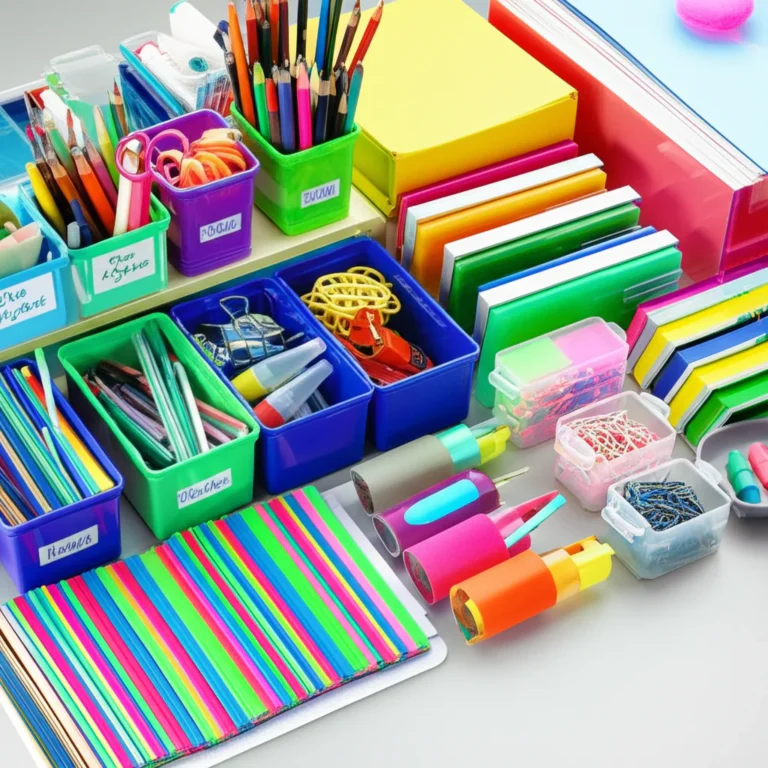
3. Organization Station: Bins, Tubs, Shelves, and the Art of Taming Chaos
If you don’t organize it, you will lose it. Period. This is where Sterilite and Rubermaid become your best friends.
- Clear Storage Bins: You need to see what’s inside. Sterilite 3-Drawer Units are perfect for desk organization.
- Divided Tubs: Essential for sorting manipulatives like counting bears, blocks, or beads.
- Rolling Carts: The IKEA RÅSKOG or Sterilite 3-Tier Cart is a mobile command center for small group supplies.
- Label Maker: A Dymo LabelWriter or Brother P-touch is an investment that pays off in seconds saved every day.
Teacher Story: I once spent 20 minutes looking for a specific worksheet because I didn’t label my bins. Now, I label everything. Even the bins that hold the bins!
👉 Shop Organization on:
- Amazon: Search for Sterilite Storage Bins
- Walmart: Search for Rolling Carts
- Dymo Official: Visit Dymo Label Makers
4. Display & Decor: Bulletin Boards, Duct Tape, and Visual Aids
Your walls tell a story. Make it a good one!
- Bulletin Board Paper: Faswall or WallPops are great for creating backgrounds.
- Duct Tape: Colored duct tape is a game-changer. Use it to mark floor spots, label drawers, or create borders. Gorilla Tape is for heavy-duty repairs.
- Velcro: Hook and Loop fasteners are essential for hanging student work without damaging walls.
- Museum Puty: QuakeHOLD or Blu Tack keeps posters up without leaving residue.
Pro Tip: Don’t cover every inch of the wall. White space is important for student focus. Use your display areas to highlight student work, not just store-bought decorations.
👉 Shop Display Supplies on:
- Amazon: Search for Colored Duct Tape
- Michaels: Search for Bulletin Board Paper
- QuakeHOLD Official: Visit QuakeHOLD Products
5. Tech & Tools: Timers, Projectors, and Digital Essentials
The modern classroom is a hybrid of analog and digital.
- Timer: The Time Timer is legendary for visual learners. It shows time passing as a red disk disappears.
- Projector: If your school doesn’t provide one, a portable LED projector can turn any wall into a screen.
- Wireless Mouse/Keyboard: Essential for navigating your smart board without being tethered to the computer.
- Extension Cords: You can never have enough. Get surge protectors with long cords.
Why a Timer? It’s not just about keeping time; it’s about time management skills for students. It creates a sense of urgency and helps transition between activities smoothly.
👉 Shop Tech Tools on:
- Amazon: Search for Timer
- Best Buy: Search for Portable Projectors
- Time Timer Official: Visit Timer
6. Classroom Management: Rugs, Mirors, and Behavior Tracking Tools
How you manage your room is just as important as what you teach.
- Rugs: A reading rug or circle time rug defines the space. Carpet tiles are great for easy replacement if a stain happens.
- Small Mirror: Keep one in your desk. It’s not just for checking your teeth; it’s for self-regulation. When a student is upset, a mirror can help them see their own emotions.
- Behavior Charts: Velcro strips and popsicle sticks are the backbone of many behavior systems.
Pro Tip: Place a small mirror at the back of the room. It allows you to see the whole class without turning around, a classic teacher trick!
👉 Shop Management Tools on:
- Amazon: Search for Classroom Rugs
- Walmart: Search for Behavior Charts
- Teacher Supply Store: Browse Educational Toys
7. Hygiene & Safety: Sanitizer, Wipes, and First Aid Must-Haves
Germ season is no joke. Be prepared.
- Antibacterial Wipes: Clorox or Lysol wipes are essential for cleaning desks and high-touch surfaces.
- Hand Sanitizer: Keep a pump bottle at the door and smaller bottles in the room.
- Tissues: You will go through boxes. Keep a stash in every corner.
- First Aid Kit: Band-aids, antiseptic wipes, and ice packs.
Quote from Teach For America: “With children come germs, so you’ll want to have wipes handy to keep you and your students healthy.”
👉 Shop Hygiene Supplies on:
- Amazon: Search for Clorox Wipes
- Walmart: Search for Hand Sanitizer
- CVS: Visit CVS Health Supplies
8. Rewards & Motivation: Stickers, Certificates, and the Psychology of Praise
Positive reinforcement works!
- Stickers: Smiley faces, stars, and animals. Keep a variety pack.
- Certificates: Pre-printed “Good Job” or “Student of the Week” certificates.
- Stamps: Self-inking stamps with encouraging messages save time and look professional.
Psychology Note: Research shows that specific praise (“I love how you used evidence in your paragraph”) is more effective than generic praise (“Good job”). Use your rewards to reinforce specific behaviors.
👉 Shop Rewards on:
- Amazon: Search for Sticker Packs
- Etsy: Search for Custom Teacher Stamps
- Michaels: Search for Certificates
9. The “Just in Case” Kit: Extra Clocks, Spare Batteries, and Emergency Supplies
The unexpected always happens. Be ready.
- Extra Clock: If the main clock is broken or hidden, a battery-operated wall clock is a lifesaver.
- Spare Batteries: AA and AAA. You will need them for remotes, timers, and calculators.
- Flash Drive: Back up your lesson plans. Technology fails; USB drives don’t (usually).
- Spare Glasses/Contacts Solution: Just in case you have a bad day.
Teacher Anecdote: I once had a projector die in the middle of a presentation. Luckily, I had a backup USB drive with the slides and a whiteboard marker. We turned it into a “draw it out” activity, and the kids loved it!
👉 Shop Emergency Supplies on:
- Amazon: Search for AA Batteries
- Walmart: Search for Wall Clocks
- Staples: Search for USB Drives
10. Personal Touches: Sentimental Items and Creating a Home Away From Home
Your classroom should feel like your space too.
- Something Special: A photo of your family, a souvenir from a trip, or a plant. It humanizes you to the students.
- Comfort Items: A fuzzy throw for your chair or a cushion for your desk.
- Tea/Coffee Mug: A good mug makes a long day feel shorter.
Why it matters: When students see that you are a person with a life outside the classroom, they connect with you better. It builds trust and raport.
👉 Shop Personal Touches on:
- Etsy: Search for Personalized Mugs
- Target: Search for Throw Pillows
- Amazon: Search for Indoor Plants
🛠️ Budget-Friendly Hacks: Where to Find Cheap Classroom Supplies Without Breaking the Bank
Let’s talk money. You don’t need to go broke to have a great classroom.
- Dollar Stores: Dollar Tree is a goldmine for bins, markers, glue sticks, and decor.
- Thrift Stores: Goodwill and Salvation Army often have rugs, lamps, and books for pennies.
- DonorsChoose: A platform where you can post projects and get funded by donors.
- Amazon Smile: A small percentage of your purchase goes to your chosen charity.
- Bulk Buying: Team up with other teachers to buy in bulk. Costco and Sam’s Club are great for paper and wipes.
Pro Tip: Sign up for teacher discount programs like DonorsChoose or Amazon Prime for Teachers. They offer exclusive deals and free shipping.
👉 Shop Budget Supplies on:
- Dollar Tree: Visit Dollar Tree Online
- Amazon: Search for Bulk School Supplies
- DonorsChoose: Visit DonorsChoose
🧠 Pro Teacher Secrets: How to Organize Your Materials for Maximum Efficiency
Organization is the key to sanity. Here’s how the pros do it:
- The “One In, One Out” Rule: If you buy a new bin, get rid of an old one. Don’t let clutter accumulate.
- Color Coding: Assign a color to each subject or group. Red for math, Blue for reading. It helps students find their way.
- Label Everything: Use a label maker or clear tape. If it’s not labeled, it’s lost.
- The “Drop Zone”: Have a specific spot for incoming papers, outgoing papers, and lost items.
Step-by-Step Organization:
- Step 1: Sort all supplies into categories.
- Step 2: Assign a home for each category.
- Step 3: Label the home.
- Step 4: Teach students where everything goes.
- Step 5: Review and adjust weekly.
👉 Shop Organization Tools on:
- Amazon: Search for Label Maker
- Walmart: Search for Color Coded Bins
- Teacher Supply Store: Browse Classroom Supplies
🌍 Inclusive Classrooms: Adaptive Materials for Diverse Learners
Every student learns differently. Your materials should reflect that.
- Adaptive Scissors: For students with fine motor challenges.
- Grip Pencil Holders: Help students hold pencils correctly.
- Visual Schedules: Use pictures to help students with autism or language delays understand the day’s routine.
- Sensory Tools: Fidgets, weighted lap pads, and noise-canceling headphones.
Why it matters: Inclusive materials ensure that every student can access the curriculum. It’s not just about fairness; it’s about equity.
👉 Shop Adaptive Materials on:
- Amazon: Search for Adaptive Scissors
- Special Education Resources: Visit Learning Ally
- Teacher Supply Store: Browse Early Childhood Education Supplies
🔄 Seasonal Refresh: Rotating Materials Throughout the School Year
Don’t let your classroom become stale. Rotate your materials to keep things fresh.
- Fall: Add pumpkins, leaves, and harvest-themed books.
- Winter: Bring in snowflakes, holidays, and cozy reading noks.
- Spring: Use flowers, butterflies, and growth-themed decor.
- Summer: Prepare for the next year with new books and fresh supplies.
Pro Tip: Store off-season items in clear bins labeled with the season. It makes swapping them out easy and efficient.
👉 Shop Seasonal Supplies on:
- Amazon: Search for Fall Classroom Decor
- Michaels: Search for Winter Classroom Supplies
- Etsy: Search for Spring Classroom Printables
🤔 Conclusion

So, there you have it! From the humble slate of the 180s to the interactive whiteboards of today, the journey of classroom materials is a testament to our ever-evolving approach to education. We’ve covered 50+ essential items, from the non-negotiables like pencils and paper to the personal touches that make your classroom a home.
Remember, the best classroom isn’t the one with the most expensive supplies; it’s the one where students feel safe, supported, and inspired. Whether you’re a new teacher just starting out or a veteran looking to refresh your space, the key is to plan, organize, and adapt.
Did we answer all your questions? We hope so! But if you’re still wondering about the perfect timer or the best brand of glue, don’t worry. We’ve got you covered in the FAQ section below.
Ready to transform your classroom? Start with the essentials, add your personal touch, and watch your students thrive!
🔗 Recommended Links
Here are some of our top picks for products mentioned in this article:
- Ticonderoga Pencils: Amazon | Walmart | Staples
- Time Timer: Amazon | Time Timer Official
- Sterilite Storage Bins: Amazon | Walmart
- Clorox Wipes: Amazon | Target
- Dymo Label Maker: Amazon | Dymo Official
- Crayola Construction Paper: Amazon | Michaels
- QuakeHOLD Museum Puty: Amazon | QuakeHOLD Official
- Books on Classroom Management: Amazon Search
❓ FAQ: Your Burning Questions About Classroom Materials Answered

What are the essential classroom supplies for a new teacher?
H4: The Absolute Must-Haves
If you’re starting from scratch, focus on these five categories:
- Writing Instruments: Pencils, pens, and erasers.
- Paper Products: Copy paper, construction paper, and notebooks.
- Organization: Bins, labels, and a label maker.
- Hygiene: Sanitizer, wipes, and tissues.
- Management: A timer, a clock, and a behavior tracking system.
Why these? They cover the basics of teaching, learning, and managing a classroom. Once you have these, you can add the “nice-to-haves.”
Read more about “💸 How Much Do Teachers Spend on Supplies in 2025? (The Shocking Truth)”
Where can I find affordable bulk learning materials for my classroom?
H4: Budget-Friendly Sourcing
- Dollar Stores: Great for bins, markers, and decor.
- Wholesale Clubs: Costco and Sam’s Club offer bulk paper and wipes at lower prices.
- Online Marketplaces: Amazon and Etsy often have bulk deals.
- DonorsChoose: A platform where you can get funded for specific projects.
- Thrift Stores: Goodwill is a hidden gem for rugs, books, and furniture.
Pro Tip: Always compare prices per unit. Sometimes the “bulk” pack isn’t actually cheaper!
Read more about “🏫 8 Best Teacher Supply Stores Online (2026)”
What technology tools are needed for a modern classroom?
H4: The Digital Essentials
- Interactive Whiteboard: If your school doesn’t provide one, a projector and wireless mouse can work.
- Timer: A visual timer like the Time Timer is crucial for time management.
- Charging Station: A caddy or cart to charge student devices.
- Extension Cords: You can never have enough surge protectors.
- Backup Plan: Always have a USB drive with your lesson plans in case of tech failure.
Why it matters: Technology enhances learning, but it shouldn’t replace human connection. Use it wisely!
Read more about “🌟 15 Top Sensory Learning Materials for Special Needs (2026)”
How do I organize classroom supplies for maximum efficiency?
H4: The Art of Organization
- Categorize: Group items by subject or function.
- Label: Use a label maker for clear, professional labels.
- Color Code: Assign colors to different groups or subjects.
- Teach: Show students where everything goes and hold them accountable.
- Review: Check your organization weekly and adjust as needed.
Pro Tip: Start small. Don’t try to organize everything at once. Focus one area at a time.
Read more about “🎒 75+ Ultimate Teacher Supplies for 2026: The Complete Survival Guide”
📚 Reference Links
- Teach For America: 19 Essential Class Materials
- Simple K12: Teacher Supply Checklist
- Kurtz Bros: 30 Essential Items That Teachers Should Have
- National Education Association: Teacher Spending on Supplies
- WorldRemit: Back to School Spending Report
- Crayola: Official Website
- Time Timer: Official Website
- Dymo: Official Website
- QuakeHOLD: Official Website
- DonorsChoose: Official Website