Support our educational content for free when you purchase through links on our site. Learn more
💸 How Much Do Schools Spend on Supplies Each Year? (2026)

You might assume that a school district’s budget covers every pencil, eraser, and glue stick needed for a year of learning. But here’s a shocking truth that will make you rethink the entire system: 90% of teachers admit to spending their own hard-earned money to keep their classrooms running. While the official numbers from the National Center for Education Statistics suggest a certain level of funding, the reality on the ground is a patchwork of district allocations, grant money, and the heroic out-of-pocket spending of educators who refuse to let their students go without.
In this deep dive, we’re peling back the layers of school finance to reveal exactly how much schools spend on supplies each year, broken down by grade level, state, and the hidden costs that rarely make it onto a balance sheet. From the staggering impact of inflation on a simple box of crayons to the real-life stories of teachers spending over $1,0 annually on their own dime, we’ve got the data you need. We’ll also uncover which brands are worth the extra penny and where you can find the grants that might just save your budget.
Key Takeaways
- The Reality Gap: While districts allocate funds for major materials, consumable supplies like paper, art supplies, and snacks often fall into a funding void, forcing teachers to cover the difference.
- Teacher Contributions: On average, educators spend between $50 and $1,0+ of their own money annually, with some spending more on classroom essentials than on their own groceries.
- Inflation Impact: The cost of basic school supplies has surged by nearly 24% in recent years, drastically reducing the purchasing power of fixed school budgets.
- State Disparities: Spending varies wildly across the U.S., with some states relying heavily on PTA fundraising and community donations while others have more robust district support.
- Smart Solutions: Teachers can maximize their budgets by buying in bulk, utilizing tax-free weekends, and leveraging platforms like DonorsChoose to fund specific needs.
Table of Contents
- ⚡️ Quick Tips and Facts
- 📜 The History of School Funding: From One-Room Shacks to Modern Budgets
- 💰 How Much Do Schools Spend on Supplies Each Year? The Shocking Numbers
- 🏫 Breakdown of School Supply Costs: Where Does the Money Actually Go?
- 🛒 The Hidden Costs: What Teachers Buy Out-of-Pocket Annually
- 📊 State-by-State Analysis: How School Supply Spending Varies Across the US
- 📉 The Impact of Inflation on Classroom Budgets and Supply Prices
- 🤝 Sources of Support: Grants, DonorsChoose, and Community Fundraising
- 🏆 Top Brands and Products: What Schools Are Actually Buying in 2024
- 💡 Smart Strategies for Maximizing Your School Supply Budget
- 🚀 The Future of Classroom Funding: Trends and Predictions
- 🔍 Search: Finding the Right Data for Your District
- 📝 Key Takeaways
- ❓ Frequently Asked Questions (FAQ)
- 🔗 Recommended Links
- 📚 Reference Links
- 🏁 Conclusion
⚡️ Quick Tips and Facts
Before we dive into the deep end of the budgetary ocean, let’s hit the surface with some eye-opening stats that might just make you gasp. 🤯
- The 90% Rule: According to a major study by Study.com, a staggering 90% of teachers dip into their own pockets to buy classroom supplies. That’s 9 out of 10 educators!
- The $50 Reality: While the average might hover lower, a significant chunk of teachers (about one-third) spend between $20 and $50 annually. Some go even higher!
- The Inflation Squeeze: Prices for basic supplies have skyrocketed by nearly 24% recently, yet teacher salaries haven’t kept pace, effectively shrinking purchasing power.
- The Tax Break Myth: Many teachers don’t know they can claim an above-the-line tax deduction of up to $30 (adjusted for inflation from the original $250) for qualifying expenses, but only if they itemize or meet specific criteria.
- The “Snack” Factor: It’s not just pencils and paper. Teachers often buy snacks, tissues, and even winter coats for students in need.
Did you know that some teachers spend more on their classroom than they do on their own groceries? 🍎📚 We’ll uncover exactly why this happens and how the numbers stack up against district budgets later in this article. But first, let’s look at how we got here.
📜 The History of School Funding: From One-Room Shacks to Modern Budgets

To understand how much schools spend on supplies each year, we have to look back at the evolution of the American classroom. It wasn’t always this complicated!
The Early Days: Community Reliance
In the 19th century, the “one-room schoolhouse” was the norm. Funding was incredibly local. Communities pooled resources, and often, the teacher was expected to bring their own quill pens, ink, and slates. The school provided the building; the teacher provided the heart (and the supplies).
The Shift to District Funding
As the 20th century rolled in, education became standardized. State and federal governments stepped in, creating district-level budgets. The idea was that the district would provide everything: desks, textbooks, and paper. The teacher’s role was purely instructional.
The Modern Gap
Fast forward today, and the system is strained. While districts do fund textbooks and major technology, the granular supplies—the glue sticks, the colored pencils, the replacement batteries for smartboards—often fall into a “grey area.”
Fun Fact: Did you know that in the 1950s, a teacher could buy a year’s supply of chalk for less than $5? Adjusted for inflation, that’s still a fraction of what we pay for a single box of high-quality chalk today! 🧂
For a deeper dive into sustainable options that save money in the long run, check out our guide on 🌱 15 Eco-Friendly Classroom Supplies That Actually Work (2026).
💰 How Much Do Schools Spend on Supplies Each Year? The Shocking Numbers
Okay, let’s address the elephant in the room. How much do schools spend on supplies each year? The answer is… it depends. It’s a bit like asking, “How long is a piece of string?” 🧵
The National Average
According to data from the National Center for Education Statistics (NCES), public schools spend billions annually on instructional materials. However, when we break it down to the per-student cost for consumable supplies, the numbers vary wildly.
| School Level | Estimated Annual Spend per Student (Suplies Only) | Notes |
|---|---|---|
| Elementary | $15 – $45 | High volume of paper, art supplies, and manipulatives. |
| Middle School | $20 – $50 | Shift towards specialized science kits and tech accessories. |
| High School | $25 – $60 | Lab materials, career-tech tools, and specialized textbooks. |
Source: National Center for Education Statistics (NCES)
The “Hidden” Budget
Here’s the kicker: District budgets often exclude consumables. They might buy the textbook, but not the workbook. They might buy the laptop, but not the charger or the case.
A study by Study.com highlighted that while districts allocate funds, the actual spending on daily consumables often relies on a patchwork of grants, PTA funds, and teacher out-of-pocket spending.
Wait, does that mean schools spend nothing?
Not exactly. But the gap between what is budgeted and what is needed is where the magic (and the struggle) happens. We’ll explore exactly where that money goes in the next section.
🏫 Breakdown of School Supply Costs: Where Does the Money Actually Go?
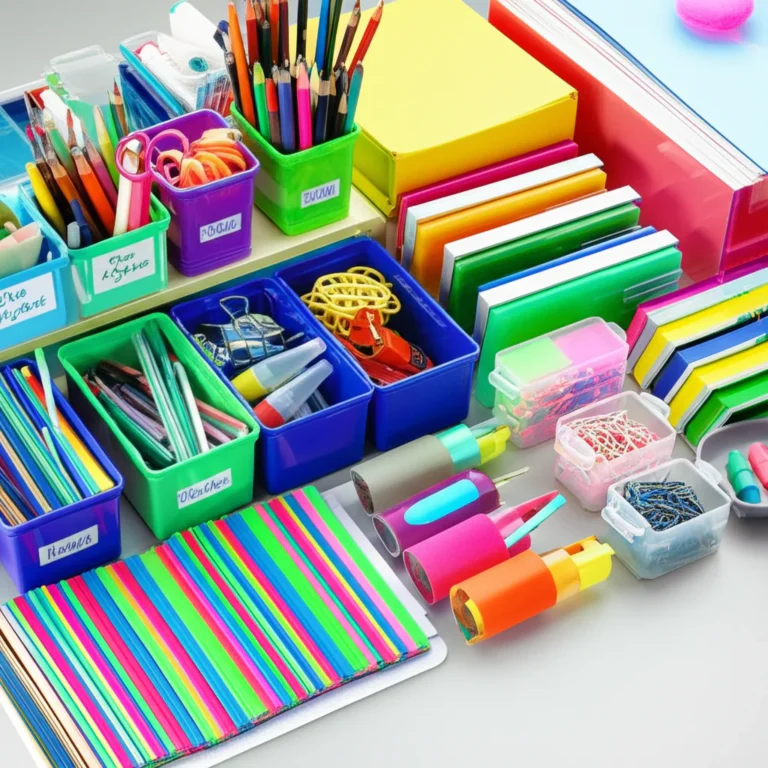
If you handed a school administrator a million dollars for supplies, where would it vanish? Let’s break down the cost distribution of a typical classroom budget.
1. Paper and Writing Instruments (The Big Eater) 📄
Believe it or not, paper products account for a massive chunk of the budget.
- Copy Paper: The lifeblood of the classroom.
- Notebooks & Workbooks: Often purchased by the class set.
- Writing Utensils: Pencils, pens, markers, and crayons. These are consumable and need constant replenishment.
2. Art and Creative Supplies 🎨
Elementary schools, in particular, burn through:
- Construction Paper: A staple that runs out faster than you can say “collage.”
- Glue and Scissors: The “oops” factor means you always need backups.
- Paints and Brushes: Watercolors, tempera, and easel paper.
3. Technology and Accessories 💻
This is the new frontier of spending.
- Headphones: Essential for computer labs.
- Chargers and Cables: The “lost and found” of the tech world.
- Software Subscriptions: While often district-funded, many teachers pay for premium features out of pocket.
4. Classroom Management and Comfort 🛋️
- Tissues and Hand Sanitizer: The pandemic made these non-negotiable.
- Snacks: For the hungry 3rd grader who forgot lunch.
- Decorations: To make the room inviting.
Pro Tip: Many teachers find that buying in bulk from wholesale clubs or online marketplaces saves them 30-40% compared to school supply stores.
🛒 The Hidden Costs: What Teachers Buy Out-of-Pocket Annually
This is the part that breaks our hearts. 🫀 Despite the best intentions of school boards, teachers are the primary funders of their own classrooms.
The Numbers Don’t Lie
- 94% of teachers spend their own money on classroom necessities (U.S. Department of Education).
- The average teacher spends between $50 and $1,0 annually, with some spending over $2,0.
- Angel Garcia, a teacher in Los Angeles, spent $275 on her own children’s supplies and another $30 for her classroom, even after winning a contest to clear her Amazon Wish List.
What Are They Buying?
It’s not just pencils. Teachers are buying:
- Student Welfare Items: Tissues, hand soap, winter coats, and even food.
- Incentives: Stickers, small toys, and treats to motivate students.
- Special Education Materials: Customized manipulatives that the district doesn’t stock.
- Classroom Infrastructure: Book bins, organizers, and storage solutions.
Why don’t schools just buy these?
Districts often have rigid procurement processes. Ordering 50 boxes of tissues might take weeks of paperwork. A teacher can buy them at Target in 20 minutes. Speed and flexibility often trump budget efficiency in the eyes of the educator.
Real Stories from the Front Lines
- Dammian Tucker (Tacoma, WA): Spends $1,50 – $2,0 annually on special education supplies. “School supplies, snacks, and paper products for my class—it adds up real fast.”
- Christopher Rener (Kansas): Documented $2,40 in spending in a single year for curicular materials and student incentives.
For more on how to find these items, browse our extensive collection of Classroom Supplies.
📊 State-by-State Analysis: How School Supply Spending Varies Across the US
Not all states are created equal when it comes to funding. Let’s take a tour of the geographic disparities.
High-Funding States
States like New York, Massachusetts, and Connecticut often have higher per-pupil spending. However, even here, teachers report spending out-of-pocket due to high cost of living and inflation.
Low-Funding States
In states like Missippi, Oklahoma, and Arizona, the gap is wider. Teachers in these regions often rely heavily on crowdfunding and community donations.
| State | Avg. Per-Pupil Spending | Teacher Out-of-Pocket Estimate | Primary Funding Source |
|---|---|---|---|
| New York | High | $60+ | District + Grants |
| California | High | $80+ | DonorsChoose + PTA |
| Texas | Medium | $50+ | PTA + Personal |
| Missippi | Low | $70+ | Community + Personal |
Note: Estimates based on aggregated teacher surveys and NCES data.
Why the difference?
It often comes down to local property taxes. Wealthier districts can fund more supplies, while underfunded districts rely on the generosity of teachers and parents.
📉 The Impact of Inflation on Classroom Budgets and Supply Prices
Remember when a box of crayons cost $1? 🖍️ Those days are gone. Inflation has hit the education sector hard.
The Supply Chain Squeeze
- Paper Prices: Up by 20-30% in the last two years.
- Plastic Products: Markers, glue sticks, and rulers have seen price hikes of 15-25%.
- Shipping Costs: Many teachers now pay for expedited shipping to get supplies before the school year starts, adding to the cost.
The “Sticker Shock”
A 2024 report indicated that 75% of teachers have increased their out-of-pocket spending compared to 2023. With teacher salaries stagnating in many areas, the real value of their contribution is shrinking.
Is there a solution?
Some districts are implementing inflation adjustments to their supply budgets, but it’s a slow process. In the meantime, teachers are getting creative with DIY alternatives and bulk buying.
🤝 Sources of Support: Grants, DonorsChoose, and Community Fundraising
If the district isn’t paying, who is? Enter the hero of the modern classroom: the crowdfunding platform.
DonorsChoose
Founded by a teacher, DonorsChoose allows educators to post projects and receive donations from the public.
- Success Rate: Over 80% of projects are funded.
- Popular Items: Books, art supplies, and science kits.
Amazon Wish Lists
Many schools have integrated Amazon Wish Lists directly into their websites. Parents and community members can buy items that are then shipped directly to the school.
Grants
- Teacher Grants: Organizations like the National Education Association (NEA) and DonorsChoose offer grants for specific projects.
- Corporate Sponsorships: Companies like Target and Walmart often have “Teacher Discount Days” or grant programs.
Did you know?
Some teachers have turned their fundraising into a full-time job, managing multiple campaigns to keep their classrooms stocked. It’s a testament to their dedication, but it shouldn’t be necessary!
🏆 Top Brands and Products: What Schools Are Actually Buying in 2024
When teachers spend their own money, they want quality. They don’t want markers that dry out in a week. Here are the top brands dominating the classroom.
1. Crayola 🖍️
- Why: The gold standard for color.
- Top Product: 64-Count Box of Crayons.
- Durability: High.
- Price Point: Moderate.
2. Expo 🖊️
- Why: The only dry-erase marker that doesn’t ghost.
- Top Product: Low-Odor Dry Erase Markers.
- Durability: Excellent.
- Price Point: Higher, but worth it.
3. Elmer’s 🧴
- Why: The glue that never fails.
- Top Product: Washable School Glue Sticks.
- Durability: Good.
- Price Point: Affordable.
4. Ticonderoga ✏️
- Why: The pencil that breaks less.
- Top Product: Pre-sharpened #2 Pencils.
- Durability: Superior.
- Price Point: Slightly higher than generic.
5. Crayola (Again) – Washable Paints 🎨
- Why: Easy cleanup is a teacher’s best friend.
- Top Product: Washable Tempera Paints.
- Durability: Good.
- Price Point: Moderate.
Comparison Table: Brand Reliability
| Brand | Product Category | Reliability (1-10) | Teacher Favorite? |
|---|---|---|---|
| Crayola | Art Supplies | 9.5 | ✅ Yes |
| Expo | Writing | 9.8 | ✅ Yes |
| Elmer’s | Adhesives | 9.0 | ✅ Yes |
| Ticonderoga | Pencils | 9.7 | ✅ Yes |
| Generic Store Brand | Mixed | 6.5 | ❌ Rarely |
Why do teachers pay more for brands?
Because time is money. A marker that works perfectly saves minutes of frustration every day. Over a year, that adds up to hours of teaching time!
💡 Smart Strategies for Maximizing Your School Supply Budget
So, how do you stretch that dollar? Here are our expert tips from the Teacher Supply Store™ team.
1. Buy in Bulk
Don’t buy a single box of pencils. Buy a case. The cost per unit drops significantly.
- Tip: Join a wholesale club like Costco or Sam’s Club.
2. Shop Off-Season
Wait until August for back-to-school sales, or buy in January when stores clear out holiday inventory.
3. Use Tax-Free Weekends
Many states have tax-free weekends for school supplies. Plan your big purchases around these dates.
4. Leverage Rewards Programs
Sign up for Amazon Prime, Target Circle, and Walmart+. The points and discounts add up fast.
5. Ask for Donations
Don’t be afraid to ask parents for specific items. A simple email can fill your supply closet.
What if you can’t afford it?
That’s where DonorsChoose and Adopt a Classroom come in. Never hesitate to ask for help!
🚀 The Future of Classroom Funding: Trends and Predictions
Where is this all heading? The future of school funding is looking… interesting.
Trend 1: Increased Corporate Partnerships
More companies are stepping up to sponsor classrooms. We expect to see more brand-specific grants and product donations.
Trend 2: Digital Subscriptions
As classrooms go paperless, the budget is shifting from physical supplies to digital subscriptions. This could reduce the need for pencils but increase the need for tech support.
Trend 3: Policy Changes
With the growing awareness of teacher burnout, some states are considering mandated supply budgets. This could be a game-changer!
Will teachers ever stop spending their own money?
It’s a question we all hope to answer with a “Yes” soon. Until then, we keep buying, hoping, and teaching.
🔍 Search: Finding the Right Data for Your District
If you’re a school administrator or a curious parent, how do you find the real numbers for your district?
1. Check Public Records
Most school districts are required to publish their budgets online. Look for the “Expenditure Report” or “Budget Summary.”
2. Contact the Superintendent
Don’t be afraid to ask. A simple email to the superintendent’s office can get you the data you need.
3. Use State Databases
Many states have education data portals where you can compare spending across districts.
Why is this data hard to find?
Because “suplies” are often buried under “Instructional Materials” or “Operational Costs.” It takes a keen eye to spot the consumable supply line item.
📝 Key Takeaways
Let’s recap the bigest lessons from this deep dive:
- Teachers are the backbone: 90% of teachers spend their own money, often hundreds of dollars a year.
- Inflation is real: Supply costs have skyrocketed, while salaries have stagnated.
- Quality matters: Teachers prefer reliable brands like Crayola and Expo, even if they cost more.
- Support is available: DonorsChoose, grants, and community donations are lifelines.
- Policy needs to change: The system is broken, and it’s time for mandated supply budgets.
❓ Frequently Asked Questions (FAQ)

What is the average cost of classroom supplies per student?
The average cost varies by grade level and district, but generally ranges from $15 to $60 per student annually for consumable supplies. However, this number often excludes the out-of-pocket spending by teachers, which can push the real cost much higher.
Read more about “The Ultimate 60+ Item Elementary Teacher Supply List (2025) 🎒”
How much do teachers spend out of pocket on school supplies annually?
On average, teachers spend between $50 and $1,0 per year. Some spend as much as $2,0 or more, especially in underfunded districts or for specialized subjects like special education.
Read more about “🎒 75+ Ultimate Teacher Supplies for 2026: The Complete Survival Guide”
What are the most expensive school supplies for classrooms?
The most expensive items are often technology accessories (headphones, chargers), science lab kits, and art supplies (paints, canvases). Paper products also add up quickly due to the sheer volume used.
Read more about “🚀 15 Must-Have Educational Posters & Charts for 2026”
How can schools reduce spending on learning materials and supplies?
Schools can reduce spending by:
- Buying in bulk to lower unit costs.
- Implementing recycling programs for paper and art supplies.
- Switching to digital resources where appropriate.
- Partnering with local businesses for donations.
- Advocating for increased state funding for consumables.
Read more about “🤔 Do You Have to Buy School Supplies? (2026)”
📚 Reference Links
- National Center for Education Statistics (NCES)
- National Education Association (NEA)
- Study.com: Teacher Spending Report
- DonorsChoose
- Quora: How much do schools spend on supplies?
🏁 Conclusion

So, how much do schools spend on supplies each year? The answer is a complex tapestry of district budgets, state funding, and the unwavering generosity of teachers. While the official numbers might suggest a certain level of support, the reality on the ground is that teachers are filling the gaps with their own hard-earned cash.
From the humble pencil to the high-tech tablet, the cost of education is rising, and the burden is falling on those who care the most: you, the educator.
Our Recommendation:
If you are a teacher, don’t go it alone. Utilize DonorsChoose, reach out to your PTA, and take advantage of tax deductions. If you are a parent or community member, support your local teachers. Buy from their wish lists, donate supplies, and advocate for better funding.
The classroom is the heart of our society, and it deserves to be fully stocked. Let’s make sure every student has what they need to succeed, without relying on the heroic sacrifice of their teachers.
Ready to stock up?
Check out our curated collections for every grade level and subject:
👉 Shop
- Crayola: Amazon | Crayola Official
- Expo: Amazon | Expo Official
- Ticonderoga: Amazon | Dixon Ticonderoga
Remember, every dollar you spend on supplies is an investment in a child’s future. Let’s make it count! 🌟